IEA versus the reality of solar PV
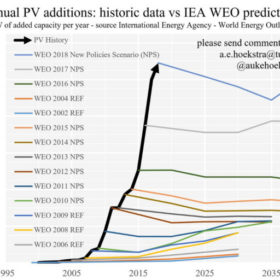
In the recently released World Energy Outlook, the International Energy Agency (IEA) foresees a steady decline in the global expansion of PV to 2035. In response, Dutch researcher Auke Hoekstra has updated his graphic, IEA versus reality in solar PV.
Building bankable utility-scale solar+storage projects
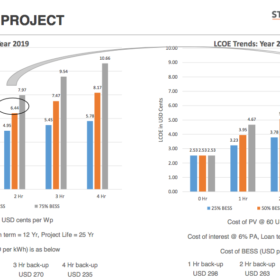
With declining costs, and increasing amounts of solar+storage added to electrical grids across the globe, there is a growing need to understand how to build bankable projects. In a recent pv magazine webinar, we discussed just this.

MIT: Solar success chiefly due to economies of scale, public policies
Although the report issued by the U.S. scientists recognizes the importance of low-level factors, like improvements in PV components and manufacturing processes, economies of scale and public policies are said to be the high-level mechanisms responsible for most of the cost decreases in solar technology and, thus, its success over the past two decades.
Solar, wind cheapest source of new generation in major economies – report
Solar and/or wind are said to be the cheapest source of new energy generation in all major economies, apart from Japan, finds BloombergNEF. It adds that China’s utility-scale PV market has contracted by over a third this year; and that battery costs are set to drop a further 66% by 2030, driven by EV adoption.
RE100 report showcases the role for corporate action in energy transition efforts
The RE100 Progress Insights Annual Report 2018, released at the end of last week, portrays the central role corporate policies can play in carbon mitigation efforts.

Boom in electromobility unlikely to cause lithium shortage
The French Environment & Energy Management Agency (Ademe) has published a report in which analyzes the dynamics of lithium supply and demand in different scenarios of global electrification by 2050. The agency experts are convinced that only with a 75% penetration of electric vehicles there is the real risk of a marked decrease in the safety margin of lithium supply.
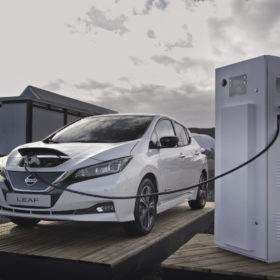
PV to take lion’s share of $120 billion annual investment
The impressive growth is unlikely to replace coal-fired power generation as it will only be sufficient to cover the predicted increase in demand for electricity. The electrification of heating, manufacturing and transportation offer room for further development.
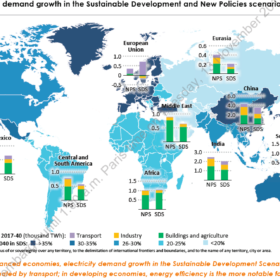
IEA World Energy Outlook: Solar PV capacity to overtake all but gas by 2040
Even in its low ball scenario, the International Energy Agency (IEA) imagines that installed solar PV capacity will overtake that of all other forms of energy apart from gas by 2040. Overall, it presents four scenarios in its 2018 World Energy Outlook, which show a changing energy landscape. While it finds that CO2 levels are, perversely, on the rise, and that many energy efforts in all but the most whimsical of its forecasts are far behind those needed to seriously address global warming, it still imagines coal, oil and gas playing a leading role in our energy mix going forward. It also sees “dramatic” transformation in the electricity sector. Long story short: Read something else if you want to take real climate action. We suggest The Drawdown.

Energy transition slowly forcing hand of oil, gas, but green investment still low
Increasing scrutiny is putting pressure on the world’s biggest oil and gas companies to jump aboard the green energy wagon. While some are making efforts to divest away from conventional energies, figures estimate that just 1.3% of total CAPEX in 2018 from the leading 24 companies will go to alternative energies.
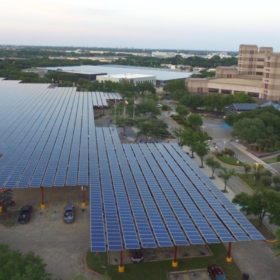
Lazard, Lazard, LCOE – what’s the cheapest energy?
Lazard’s newly released Levelized Cost of Energy Analysis 12.0, and Storage 4.0, finds that where utility scale wind works, it dominates – and that the unsubsidized cost to build new utility wind and solar facilities is equal to, and often less than running already-built fossil facilities.
