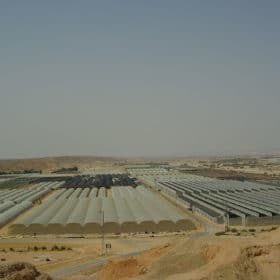
Israeli government wants to boost development of agrivoltaics
The Israel Ministry of Energy and the Ministry of Agriculture have decided to implement a pilot research program to assess the feasibility of agrivoltaic projects in the country. The possibility of combining PV and agriculture in a land with limited land availability and increasing energy demand is considered a win-win solution by the government.

Could agrivoltaics feed demand for clean energy?
Agrivoltaics could result in more food, more energy, lower water demand, lower carbon emissions, and more prosperous rural communities, says an Oregon State University researcher. He plans to build a farm to prove the point.
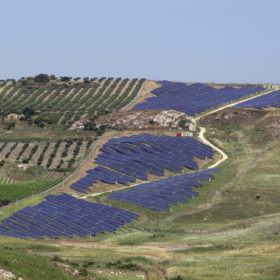
India tenders 6.4 GW of PV for agricultural load power demand
Solar power developers have until December 28 to bid for an aggregate 6.4 GW of grid-connected solar power capacity in Andhra Pradesh, which will be spread across 10 locations in the state. The Andhra Pradesh Green Energy Corporation will serve as the offtaker and supply the power procured from these projects to meet the demand of agricultural loads in the state.
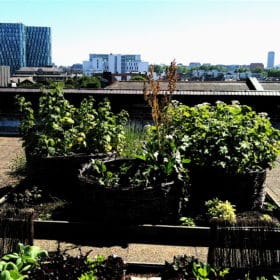
Rooftop PV vs. rooftop farming
U.K. researchers have developed a way to optimize urban rooftop use with solar PV and agriculture.
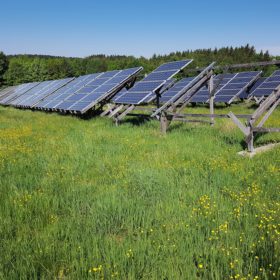
Chinese PV Industry Brief: Jinko announces 2 GW agrivoltaic project in Heilongjiang Province
Meanwhile, Chinese state-owned energy company State Power Investment Corporation (SPIC) has acquired a solar energy developer in Mexico and JA Solar has started construction on the second phase of its 20 GW ingot factory in Yunnan Province.
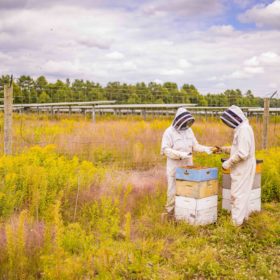
Agrivoltaic beekeeping project in Spain
Endesa plans to set up beekeeping projects at two of its PV plants. The pilot initiative will include the cultivation of 3 hectares of plants that will be pollinated by bees.

French consortium wants to mobilize €1 billion for agrivoltaic projects
Sun’Agri and RGreen Invest have launched an initiative aimed at deploying around 300 agrivoltaic projects in France by 2025.
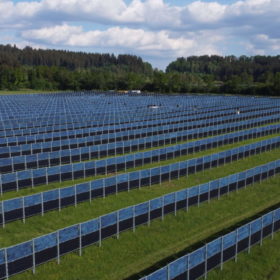
Agrivoltaic project with vertically mounted bifacial panels goes online in Germany
German developer Next2Sun has completed a 4.1 MW solar plant built with roughly 11,000 bifacial panels provided by Chinese manufacturer Jolywood.

Agrivoltaics for pear orchards
Belgian researchers are testing agrivoltaic power generation in a pear orchard. The first pilot project features specially designed 185 W solar panels with transparent backsheets, conventional silicon cells, and a 21% efficiency rate.
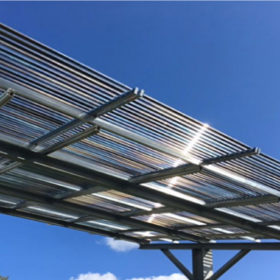
Thin-film agrivoltaic solar tubes
German tech company Tube Solar AG has secured €10.8 million to develop its cylindrical agrivoltaic modules. The lightweight devices could also be used on roofs until now considered unsuitable for PV.
