
CSIRO puts battery chemistries to test in tropical conditions
Researchers from Australia’s national science agency are working with Malaysian authorities to assess how different battery chemistries perform under tropical conditions, including high temperatures, humidity, and corrosion, and how these factors affect durability, safety, and cost effectiveness.
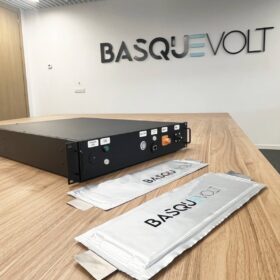
Iberdola-led project develops solid-state battery module for stationary storage
Basquevolt and Bcare have successfully developed and integrated the first solid-state cells into a module for stationary applications, accomplishing this within the Iberdrola-led ASTRA-CC project (2023–2025).
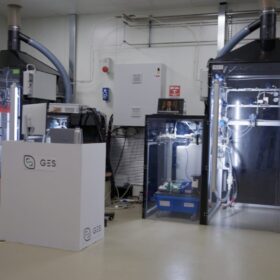
GES rolls out manganese-hydrogen battery with significant cost edge over lithium-ion
The Italian company said the manganese-hydrogen battery it has developed represents an advanced solution for long-duration energy storage. The technology enables energy to be stored for many hours or even days, overcoming the structural limitations of lithium-ion batteries.

The eyes and ears of the power grid
Sensors are an indispensable tool to inform utility managers of the state of the electricity grid and the occurrence of disruptions of any kind. The IEC provides the standards and conformity assessment that enable them to operate safely and efficiently.
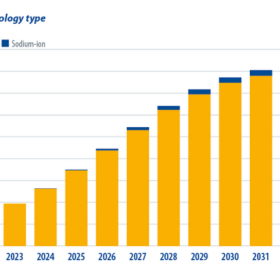
Why sodium-ion can’t yet challenge lithium-ion’s reign
A new generation of sodium-ion (Na-ion) battery cells has been launched as an alternative to the virtual monopoly of lithium-ion (Li-ion). Although the technology is unlikely to displace significant Li-ion market share, recent improvements make Na-ion a viable solution for certain niche applications, with potential for wider usage if cost becomes competitive.

Hybridization: The new paradigm for a more resilient and competitive renewable market
One of the main benefits of hybridization is the ability to offer more attractive and stable energy products to clients. A hybrid PPA better covers consumption needs, reduces risks associated with the variability of a single source, and allows for more competitive long-term pricing, writes Rodrigo López, head of revenues at BNZ.
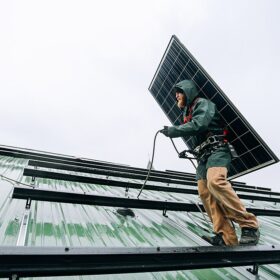
Electricity rate hikes slash commercial solar payback periods in US by 33%, says Wood Mackenzie
Soaring utility costs and rising power demand are recalibrating the financial outlook for the United States non-residential solar market.

Dutch long-duration energy storage project targets sub-€50/kWh costs with innovative technologies
The SLDBatt project brings together TRL 7 battery technologies – including molten sodium‑salt, saltwater acid–base flow, and hydrogen–iron flow batteries – to deliver an innovative and cost-effective long-duration energy storage solution.

Floating PV could power up to 490,000 households in Hong Kong
Hong Kong has limited land, and researchers have checked how much of the city can be powered if most of its water reservoirs were to be fully or partially covered with floating PV systems. At best, full coverage can supply more than 15% of the city’s total demand, and more than 60% of the residential demand.
Neoen’s battery to pioneer grid-forming services on French transmission network
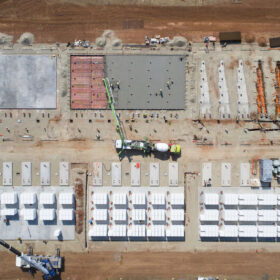
At a major battery project, RTE and Neoen are trialing an inverter retrofit, marking a first for grid-forming services on France’s transmission network.
