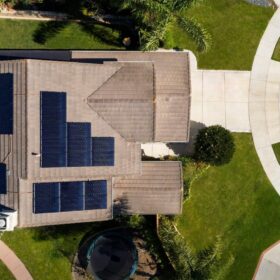
Texas leads VPP adoption with deregulated market
Texas is uniquely suited to adopt virtual power plant (VPP) technology due to its competitive, deregulated market. Its success highlights the “perverse incentive” of vertically integrated utilities in other US states to make capital expenditures without discretion to raise profits.
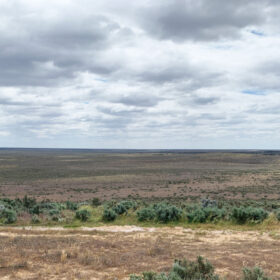
Australian developer plans 2 GW renewables project
Squadron Energy has filed documents with the state government of New South Wales, Australia, in a forward step on its proposed 2 GW Koorakee Energy Park, which will include a 1 GW solar farm and 1 GW of wind energy, backed by a 1 GW/12 GWh battery energy storage system.

Uzbekistan to build its first big battery
Nur Bukhara Solar PV LLC FE, a project company owned by Masdar, will deliver a 63 MW battery energy storage system alongside a 250 MW solar plant in south-central Uzbekistan.
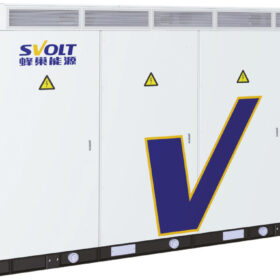
Svolt abandons plans to open battery factory in Germany
Chinese battery manufacturer Svolt has cancelled plans to open a plant in the German state of Brandenburg. Meanwhile, its plans for cell production in Saarland, southwest Germany, continue to be delayed.

The prospects for battery investment in Germany
Merger and acquisition (M&A) activity has been heating up in Germany but increased competition and high interest rates are affecting renewables project values. Baris Serifsoy, partner at GreenCap Partners, examines the investment landscape in one of the world’s most developed PV markets.

Solarwatt shuts down battery factory in Germany
Solarwatt says it will shut down its battery factory in Germany. Battery production at the Dresden facility will halt at the end of this year, and the company will move all battery and solar panel production to China.
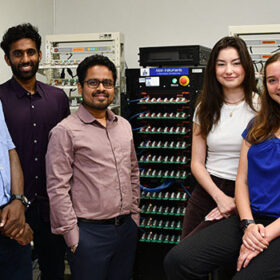
Bringing lithium-sulfur batteries closer to commercialization
Researchers at the University of South Carolina have successfully transitioned their highly-durable lithium-sulfur battery technology from coin to pouch cells and reported competent energy densities.
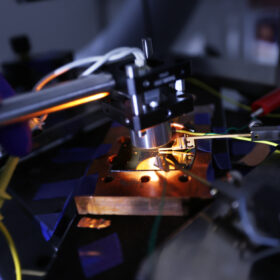
U.S. scientists develop air-bridge thermophotovoltaic cells with 44% efficiency
U.S. scientists have developed a thermophotovoltaic cell that could be paired with inexpensive thermal storage to provide power on demand. The indium gallium arsenide (InGaAs) thermophotovoltaic cell absorbs most of the in-band radiation to generate electricity, while serving as a nearly perfect mirror.
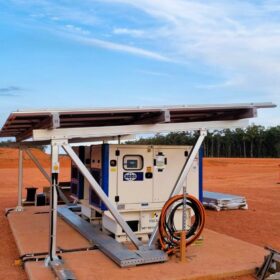
Car park solar roofing system for off-grid solution
The versatility of solar mounting manufacturer and balance-of-system provider Clenergy’s ezShade 2.0 solar shade system has been put to the test with the solution at the core of a standalone power system fuelling an off-grid communications site in remote northern Queensland.
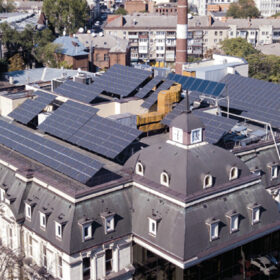
Coalitional game theory to improve P2P trading in energy communities
An international research group has utilized a newly designed coalitional game system to ensure economic fairness between members of energy communities. The game system considers different types of prosumers relying on stand-alone and combinations of solar and storage.
