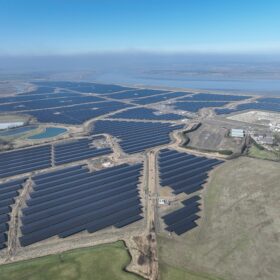
UK’s largest solar and storage project secures financial close
Quinbrook completes financing for Cleve Hill Solar Park in Kent, England. The solar and storage project will be the largest in the United Kingdom when it goes live later in 2025. The developer claims contract for difference, capacity market and power purchase agreements (PPAs) were critical to securing project financing.

Belgian capacity auctions catalyze 1.1 GW of battery storage
Similar to last year, battery energy storage systems (BESS) made up almost all new-build capacity selected in recent Capacity Remuneration Mechanism (CRM) auctions in Belgium. Simon De Clercq, senior research associate at Aurora Energy Research, tells ESS News that there is even more room for BESS players to participate in the procurement exercises.

Battery storage on a capacity market
In Germany – but not only there – there is a heated debate about the pros and cons of a capacity market. The German Renewable Energy Association is against it, and recently the German New Energy Industry Association, the DIHK and the EEX energy exchange have also taken a clear stance: Germany does not need a “power plant subsidy program.” In this article, four experts explain why battery storage can also play an important role in a capacity market and make recommendations on how the design of the market can help avoid mismanagement, wrong incentives and unnecessary costs.

Poland’s new capacity market auction could hamper storage deployment
The draft parameters for this year’s capacity market auction in Poland could make the rollout of battery energy storage systems (BESS) much more difficult. The document proposes a significant reduction to the BESS derating factor that could be particularly harmful for longer duration storage systems.

Weekend Read: Hanging in the balance
Battery storage revenues in Britain are well below historic highs but an appetite for storage capacity remains. Electricity system-operator modernization, increased competition, and new opportunities could all shape the future of British battery energy storage systems (BESS’).
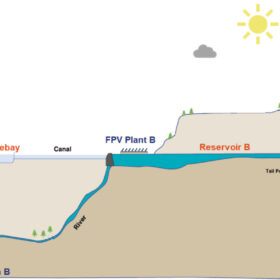
Batteries in hybrid hydro-PV systems could increase profitability by 2%
Researchers from Norway have discovered that adding batteries to projects that combine hydropower and floating PV could increase annual profits by as much as 2%, due to revenues from ancillary services and capacity markets.
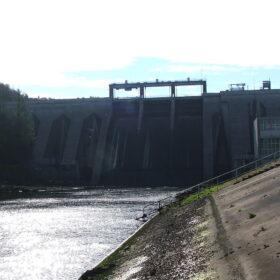
Ireland signs 109 MW of storage, 232 MW of pumped hydro in capacity auction
EirGrid assigned 7.2 GW of capacity in its latest auction, with 5.4 GW to come from gas power plants. The auction clearing price reached €83.050 ($90.554)/MW per year.
UK considers reform of renewables subsidy regimes
A conference about the UK’s electricity market showed organizations are considering the future of the country’s energy sector and how to achieve a net zero economy.
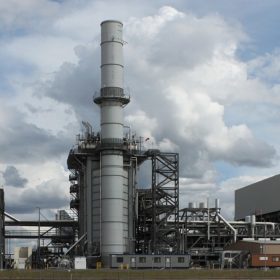
Polish gas plans could leave taxpayers needing to find billions
With the Polish government planning to commission five gas power plants over the next five years, London-based thinktank Carbon Tracker has estimated just how costly the move will be, compared to deploying solar plants and energy storage instead.
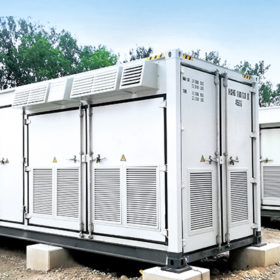
Italy’s third Capacity Market auction expected to open new opportunities for large-scale storage
The retirement of coal baseload capacity, some regulatory adjustments and high energy prices volatility could bode well for the deployment of batteries in Italy, and especially in Sicily. Problems, mostly related to the timing and the structure of the auction, remain, however. We spoke about it with Michele Scolaro, Aurora Energy Research Associate.
