
Bust to boom: Key takeaways from Czechia’s Smart Energy Forum
As Czechia reaches its solar potential, with impending changes to the country’s legislative landscape ushering in greater utility-scale solar array rollouts, over 5,000 attendees – government ministers, industry experts, and key business stakeholders – descended on Prague this week for the 2023 Smart Energy Forum.
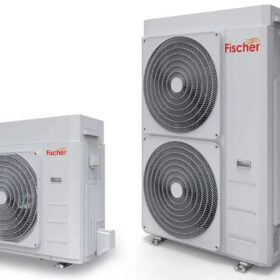
Fischer Commercial presents air source heat pumps for residential applications
Fischer Commercial, a UK-based heat pump supplier, has unveiled new air source heat pumps for residential use. It is making them at its factory in Guadalajara, Spain. It claims that they offer a seasonal coefficient of performance (SCOP) of up to 4.85.
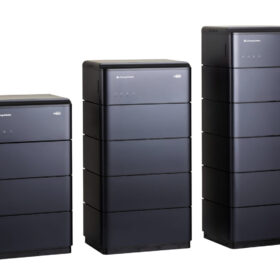
LG debuts stackable home batteries ranging from 10.6 kWh to 17.7 kWh
LG Energy Solution will start selling its new enblock S batteries on the US market in November.

Plus Power raises $1.8 billion for US energy storage facilities
Plus Power has raised $1.8 billion to construct battery energy storage system (BESS) facilities in Arizona’s Salt River Project and the ERCOT market in Texas.

Canada’s largest behind-the-meter solar project
Construction has started on two solar projects in the Canadian province of Alberta, including one with a flow battery energy storage system.

Ecoflow launches ‘retrofit’ residential battery with PV-coupling technology
The 5 kWh battery solution uses Ecoflow’s PV-coupling technology that reportedly ensures an easy connection to existing solar arrays. The new product features an output voltage range of 150-800 V.

Australian researchers achieve lithium-sulphur battery breakthrough
Monash University researchers in Australia have developed a new lithium-sulphur battery design. They claim that it requires less lithium, with more energy per unit volume. It purportedly lasts longer and can be produced for half the price of the dominant lithium-ion technology.

Shaping the Future: Insights from the IEA PVPS Trends Report on Photovoltaic Applications 2023
The IEA PVPS Trends Report for 2023 discloses a historic milestone in the photovoltaic (PV) industry, surpassing 1 TW of cumulative capacity. The PV industry registered significant global growth in 2022, with China and Europe leading in charge. PV competitiveness in the market was strong, despite some regions facing problems due to supply issues, grid capacity constraints or labor shortages. The report shows that global collaboration, innovation and strategic planning remain key to a sustainable energy transition.

New online platform in Spain facilitates investments in wind, PV, storage projects
Spanish company nTeaser recently launched a new platform that connects developers and investors to buy and sell renewable energy projects without intermediaries.
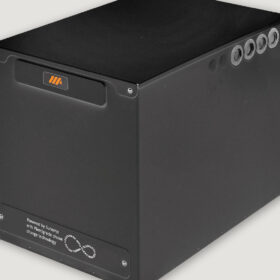
Triple Solar introduces residential thermal battery
Dutch company Triple Solar has launched a residential thermal battery with a heat loss rate ranging from 0.67 kWh/day to 0.84 kWh/day. The new product can reportedly provide hot water at temperatures ranging from 45C and 55C, with the minimum heat source temperature ranging between 65C and 80C.
