
BlackRock commits AUD 1 billion to big batteries in Australia
BlackRock has acquired Australian battery storage developer Akaysha Energy and its portfolio of nine projects.
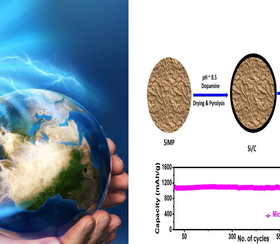
Resilient anode material for high-performance lithium-ion batteries
Scientists in Japan have developed black glasses grafted silicon microparticles as a negative electrode material to improve lithium-ion battery performance.
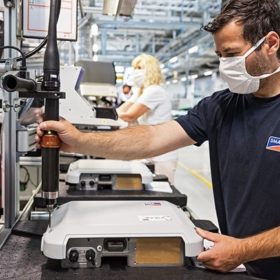
Supply chain difficulties translate into losses for SMA
SMA’s Home Solutions segment was particularly badly hit as the PV inverter manufacturer struggled to meet the demand due to the shortage of materials. The sales and results in the first half of 2022 were therefore significantly worse than in 2021. The company now wants to take “a series of measures to improve its long-term ability to deliver.”
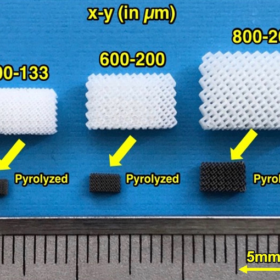
Micro-engineered, high-performing anode for sodium-ion batteries
Scientists in Japan have demonstrated sodium-ion batteries using hard carbon microlattices, produced with an inexpensive 3D printer. In addition to reducing the battery size and slashing manufacturing costs, the resulting anode allows fast transportation of energy-generating ions.

Magnesium superionic conductor for lithium-free solid-state batteries
Scientists in Japan have developed a novel metal-organic, framework-based magnesium ion conductor with superionic conductivity, even at room temperature.
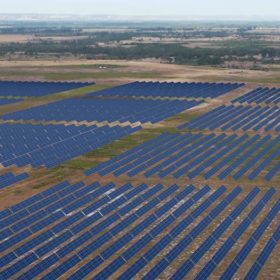
Australian solar park could generate hydrogen for less than $2/kg
A new study shows that hydrogen could be produced for as little as AUD 2.85 ($1.98) per kilogram, supporting Frontier Energy’s plans to make green hydrogen from a 500 MW solar project it is developing in Western Australia.
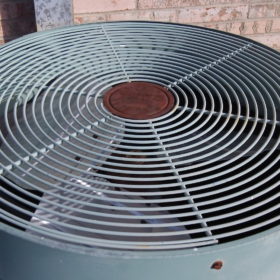
Impact of heat pumps on Ireland’s energy system
New research from Ireland shows that electrification could lead to more efficient utilization of renewable energy and the national transmission network.
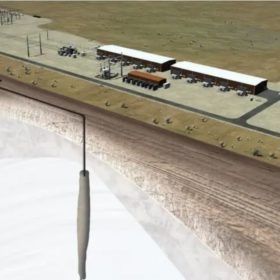
World’s largest underground hydrogen storage project
Mitsubishi Power Americas and Magnum Development are set to begin construction on a 300 GWh underground storage facility in the US state of Utah. It will consist of two caverns with capacities of 150 GWh, to store hydrogen generated by an adjacent 840 MW hydrogen-capable gas turbine combined cycle power plant.
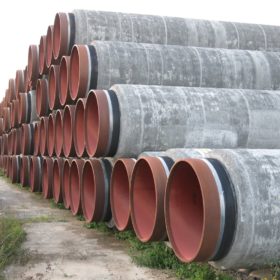
European energy without Russian gas
Scientists in Denmark have modeled the likely impacts of reduced gas supply on the European energy mix up to 2050. Their research finds that if the continent is to achieve the Paris Agreement goal of limiting global average temperature increase to 1.5 C, then gas consumption would need to be heavily reduced, anyway. In less ambitious climate scenarios, however, limited gas supplies could delay the phase-out of coal-fired electricity and lead to longer-term uncertainty over fuel and electricity prices.
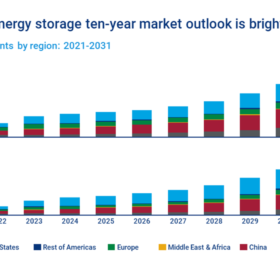
Global energy storage deployment may hit 500 GW by 2031
Wood Mackenzie said it expects the United States and China to represent 75% of global energy storage demand in a highly consolidated market.
