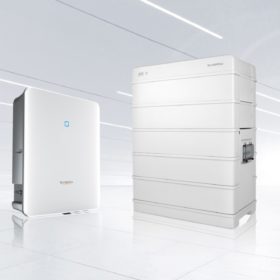
Sungrow launches high-voltage battery and hybrid inverter for residential applications
The Chinese manufacturer will begin selling its new products in Australia and Europe. The hybrid inverter has an efficiency of up to 98.4% and the lithium iron phosphate battery features a storage capacity between 9.6 kWh and 102.4 kWh, depending on the number of modules.
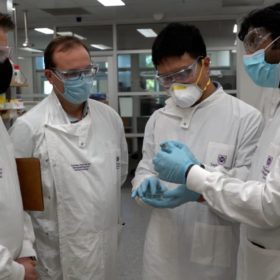
Graphene aluminum ion batteries with ultra-fast charging
The “graphene revolution” is almost here. Australian scientists specializing in aluminum-ion batteries are now working with Brisbane-based Graphene Manufacturing Group to commercialize a technology that could transform energy storage.
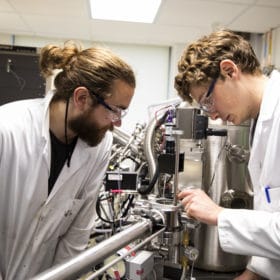
Cracking the case for solid state batteries
Scientists in the UK used the latest imaging techniques to visualize and understand the process of dendrite formation and electrolyte cracking in an all solid-state battery. With new insight into the mechanisms by which these cracks form and ultimately lead to battery failure, the results could help direct the focus of future research into solid-state battery technology.
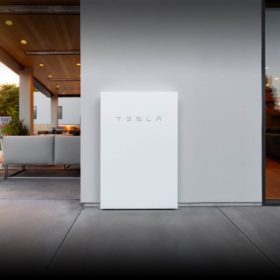
Tesla touts the market strength of its Powerwall energy storage product
In an earnings call, the company said that storage deployments grew 71% YoY and solar installations were its strongest in 2.5 years.

Enabling aluminum in batteries
Scientists in South Korea and the UK demonstrated a new cathode material for an aluminum-ion battery, which achieved impressive results in both specific capacity and cycle life. The material allows researchers to better take advantage of aluminum’s energy storage characteristics, and produce batteries with much higher capacity.
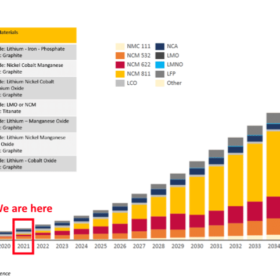
World’s first battery-grade graphite producer outside of China
Australia’s Renascor Resources has confirmed it has raised AUD 15 million ($11.6 million) to fund its Siviour battery anode material project up to the construction phase. The project will be the world’s first integrated mine and purified spherical graphite operation outside of China.
Engie exits storage business
The French energy company sold its 60.5% stake in Engie EPS to the Taiwan Cement Corporation for around €132 million.
Spanish developer plans 1 GW solar plant coupled to 80 MW of storage, 100 MW electrolyzer
Soto Solar has submitted the project proposal to the Ministry of the Ecological Transition and the Demographic Challenge (Miteco). The solar plant could start production in 2023 or 2024 and will have a generation capacity of more than 2,000 GWh/year.
Australian regulator proposes rewards for new, ultra-fast services in the electricity market
The Australian Energy Market Commission has released proposals to reward fast frequency services in the National Electricity Market for the first time.
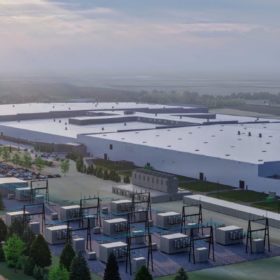
GM and LG Energy plan a $2.3 billion electric vehicle battery plant
The automaker’s future Ultium-powered EVs are designed for Level 2 and DC fast charging. Most will have 400V battery packs and up to 200 kW fast charging capability.
