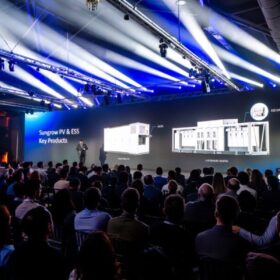
Sungrow brings grid-forming PowerTitan 3.0 storage system to Europe
Sungrow is introducing its large-scale energy storage system, PowerTitan 3.0, to Europe, featuring grid-forming capability, next-generation battery cells, DC coupling for co-located solar projects, and streamlined commissioning to accelerate deployment.
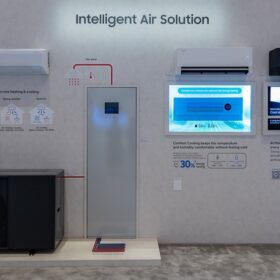
Samsung releases new all-in-one heat pump for residential use
The South Korean giant said its new EHS All-in-One provides air heating and cooling, floor heating, and hot water from a single outdoor unit. It can supply hot water up to 65 C in below-zero weather.
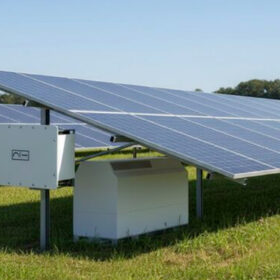
Moonwatt brings DC-coupled, passively cooled sodium-ion tech to solar projects
The Dutch start-up, founded by former Tesla leaders, is taking a novel approach to sodium-ion battery technology, optimizing it for integration with solar power plants. Its technology is set to be deployed for the first time in a Dutch solar-plus-storage project later this year.

Envision claims AI-enabled storage systems can detect battery safety risks days in advance
Envision Energy has launched a fully integrated energy storage solution combining hardware, software, and market-facing AI to optimize performance, safety, and trading. Its “Physical AI” platform embeds intelligence across cells, systems, and operations, enabling predictive maintenance and real-time market participation.

U.S. authorities find no definitive evidence of hidden devices in Chinese solar inverters
New documents reveal US government found only two cases of communications in Chinese inverters that differed from official documentation. The discrepancies were deemed “non-malicious” and “non-intentional” by investigators.
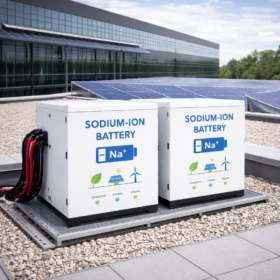
Sodium-ion batteries now competitive in niche markets
Sodium‑ion batteries are emerging as a safer, lower-cost alternative to lithium‑ion, with a recent international study highlighting their competitiveness in stationary energy storage. The research shows that ongoing investment and supply-chain development could enable broader adoption within the next decade.

RheEnergise commissions first ‘high density hydro’ long-duration storage in UK
Pilot long-duration energy storage (LDES) project uses low viscosity, denser-than-water fluid. RheEnergise is panning for future projects in 10 MW to 100 MW range, with six to 20 hours of storage capacity.
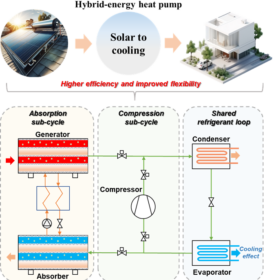
Scientists unveil hybrid-energy heat pump combining absorption and compression cycles
Researchers in Hong Kong have developed a hybrid-energy heat pump that seamlessly combines absorption and compression cycles using crystallization-free ionic liquids, improving efficiency and reliability across varying solar conditions. Simulations in multiple Chinese cities show the system can significantly cut electricity use and cooling costs, making it promising for sustainable building cooling and future commercial scaling.

Sigenergy secures top position for multiple storage markets as installer adoption accelerates
SunWiz market data ranks the manufacturer as the top energy storage supplier in Australia, Ireland, and South Africa.
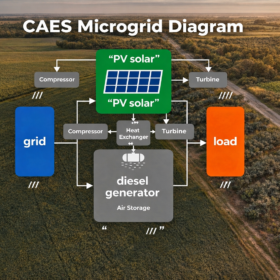
How to combine C&I solar with compressed air energy storage
Researchers have studied the potential of combining photovoltaic systems with compressed air energy storage (CAES) to power a commercial building in South Africa. They found that a co-optimized system could lower total capital costs by 15–20% compared to traditional sequential sizing approaches.
