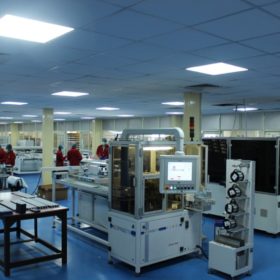
Gautam Solar to add 500 MW of TOPCon panel production capacity
India’s Gautam Solar is expanding its solar module production capacity to 1 GW by adding a 500 MW tunnel-oxide passivated contact (TOPCon) manufacturing line from Jinchen. The new line will start production by September.
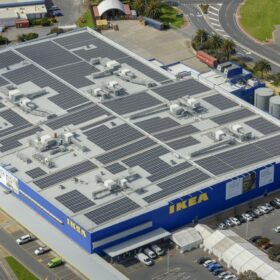
Australia’s largest commercial microgrid goes online
Australia’s largest grid-connected urban microgrid has been officially commissioned with a new rooftop solar-powered system on Ikea’s store in Adelaide. It already delivers more than 70% of the store’s energy needs and provides grid support for the South Australian network.

Slenergy emerges as new one-stop solar shop for Europe
A new solar company has entered the PV market, pv magazine learned this week at SNEC in Shanghai. The company sells everything from PV modules and inverters to racking and wallboxes.
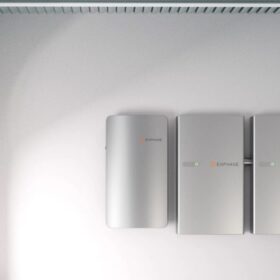
Enphase launches new residential battery
The IQ Battery 5P works in conjunction with the Enphase Energy System and can be configured for self-consumption, savings, or full backup functionality.
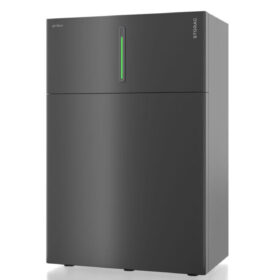
German manufacturer unveils 10 kWh residential redox flow battery
Prolux Solutions has developed a redox flow battery with a charging and discharging capacity of 4 kW and 5 kW of peak power. It is designed to be coupled with PV systems in homes with high consumption profiles.

Australia signs new climate, clean energy deal with US
Australia and the United States have agreed to collaboratively accelerate and expand clean energy supply chains, renewable energy tech manufacturing, and supplies of critical minerals.
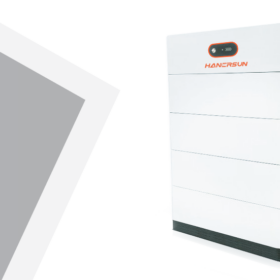
Hanersun unveils high-voltage residential battery
Chinese module manufacturer Hanersun has introduced six versions of its new stackable, high-voltage residential batteries, ranging in nominal capacities from 7.5 kWh to 20 kWh. The batteries, which feature lithium-iron phosphate (LFP) technology, come with a five-year warranty.
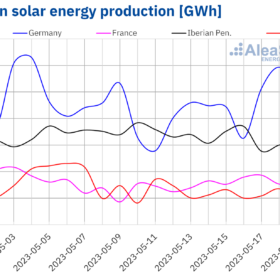
New episodes of negative or zero prices in European electricity markets
In the third week of May, negative or zero hourly prices were registered in most of the European electricity markets, especially during the weekend. In the Nord Pool market, the value of -€5.67/MWh registered during an hour on Sunday May 21, is the lowest one in history. For the week as a whole, prices decreased in every market, due to the decrease in demand and gas prices, and also to a higher solar and wind energy production than that of the previous week in several markets.
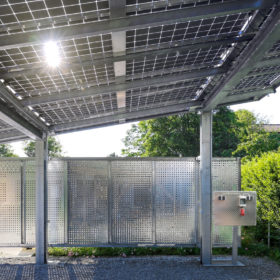
Biofuels vs. solar electricity for urban mobility
Solar electricity will have to compete with biofuels in the urban mobility landscape. Biofuels, however, have a very low energy productivity per hectare, as well as high requirements for fertilizers, pesticides, and water.
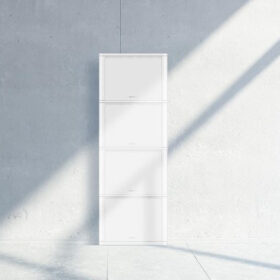
Pylontech to open battery factory in Italy
Pylontech says it plans to build a new manufacturing facility in Veneto, northern Italy. The company will operate the factory under a joint venture with its Italian partner, Energy Spa.
