
First Solar opens 3.5 GW solar factory in Alabama
First Solar has opened a $1.1 billion, 3.5 GW solar manufacturing facility in Lawrence County, Alabama.

US module manufacturers seek ‘critical’ retroactive tariffs
Led by First Solar and Qcells, US solar module manufacturers have filed allegations with the US Department of Commerce, citing “critical circumstances” and suggesting increased module imports due to their previous lawsuit filings.

First Solar opens US research facility
First Solar has commissioned the Jim Nolan Center for Solar Innovation in Lake Township, Ohio. It includes a high-tech pilot manufacturing line to produce full-sized prototypes of thin-film and tandem PV modules.
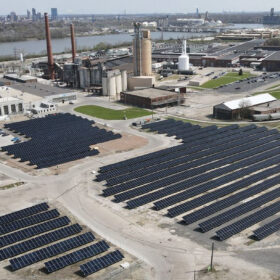
US, Canada ramp up solar glass plans
With PV module capacity ramping up, glass suppliers have been investing in new solar glass production capacity. As in India and China, new facilities are popping up in North America, with unique twists to ensure competitiveness, such as using recycled material.

Top utility-scale solar PV contractors add 20 GW in 15 months
Wiki-Solar’s latest league table finds the cumulative installations of the top 34 engineering, procurement and construction (EPC) contractors now globally stands in excess of 100 GW (AC).
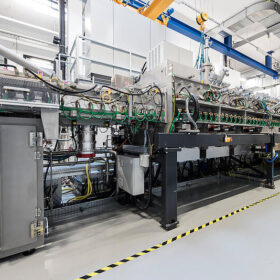
ZSW, First Solar partner to collaborate on thin-film PV
Zentrum für Sonnenenergie- und Wasserstoff-Forschung Baden-Württemberg (ZSW) and First Solar have agreed to work together to develop thin-film PV technologies on a gigawatt scale.

Perovskite thin film: Out with the old, in with the new
Silicon-perovskite tandem solar requires optimization of both approaches, and embodies the weaknesses of each. Meanwhile, the use of pure thin-film devices offers a cheaper, simpler, and more sustainable PV solution for the United States.

Yaskawa Solectria Solar to exhibit US-made utility-scale inverters
Yaskawa Solectria Solar, in partnership with panel manufacturer First Solar, has developed utility-scale inverters to reduce degradation rates.
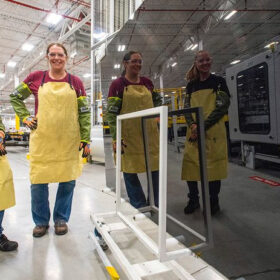
Weekend Read: The fruitful search for other thin films
First Solar and its cadmium telluride (CdTe) technology dominate thin-film solar in the mainstream market. Valerie Thompson looks at the US-based business and the future of thin-film PV technology.
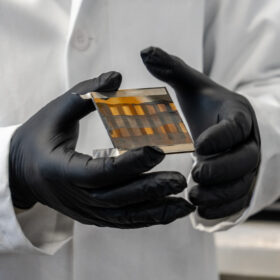
Commercial perovskites imminent
Andries Wantenaar, a solar analyst at Rethink Energy, explains why he sees a bright future for perovskite PV cells, with technological advancements and major R&D investment paving the way for revolutionary change.
