
Mitsubishi presents new residential air-to-water heat pumps
Mitsubishi said that the two new products of its Hydrolution EZY series can produce domestic hot water up to 75 C when outdoor temperatures reach -25 C. The new systems have capacities of 6 kW and 7.1 kW.

World’s largest heat pump under development in Germany
The 162 MW project is being developed by German utility MVV Energie. The system will use water from the Rhine river as a heat source and is expected to generate heat with temperatures of up to 130 C.

Fairland launches AI-based residential heat pump with coefficient of performance of 7
The Chinese manufacturer stated that its new heat pump system is the first on the market to achieve a coefficient of performance of 7. The product offers a nominal capacity ranging from 11 kW to 16 kW and uses propane as its refrigerant.
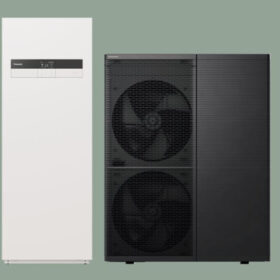
Panasonic unveils new air-to-water heat pump for residential use
The Japanese electronics manufacturer said its new heat pump system is an ideal solution for centralised heating and domestic hot water installations. It offers a heating capacity of 9 kW to 16 kW and a seasonal coefficient of performance of up to 4.31 at low temperatures.
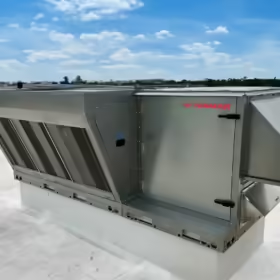
Japanese manufacturer launches dual-fuel commercial rooftop heat pump
Japanese machinery maker Yanmar says its new commercial rooftop units (RTUs) include a standard model, a dual-fuel heat pump, and a dedicated outdoor air system (DOAS) with integrated energy efficiency ratios (IEER) up to 21.3.
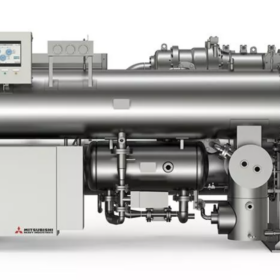
Mitsubishi debuts 640 kW heat pump providing hot water up to 90 C
The ETI-W heat pump, with a coefficient of performance of up to 4.1, utilizes heat emitted from factory production processes as a heat source to supply hot water at up to 90 C. Debuting on the Japanese market, the system targets industrial and commercial applications.

Clivet debuts indoor heat pump for residential use
The Italian manufacturer said that its new monobloc propane heat pump can produce hot water at temperatures of up to 70 C, with a coefficient of performance of up to 5.31.
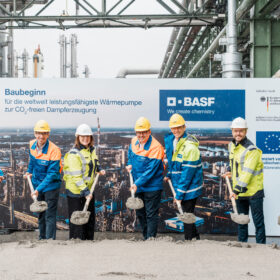
BASF begins building 50 MW industrial heat pump
Germany’s BASF has begun constructing an industrial-scale heat pump that will use electricity from renewables to produce up to 500,000 MT of CO2-free steam each year. Commissioning is scheduled for mid-2027.
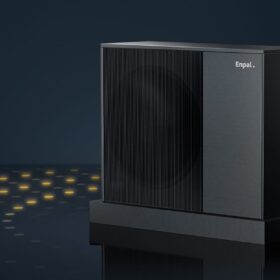
Enpal unveils residential heat pump for large heating loads
The German company is introducing its own heat pump with a heating output of up to 16 kW and a maximum flow temperature of 80 C. The system is designed to meet rising demand in large single-family homes and unrenovated existing buildings.
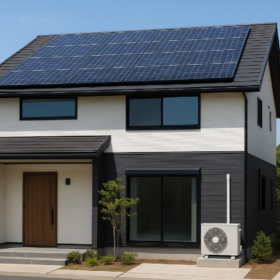
Making the business case for solar-plus-storage with heat-pumps in Japan
A Japanese research team has evaluated the affordability of photovoltaic-battery systems featuring heat-pump water heaters and air conditioning units across nine regions of Japan. They analyzed three price policies and two loan types, identifiying a tradeoff between net demand and cost according to the capacity of the solar-plus-storage system.
