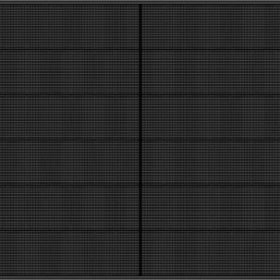
REC launches 405 W black solar module with gapless design
The new heterojunction panel series features an efficiency of up to 21.9 % and an operating temperature coefficient of -0.26% per degree Celsius.
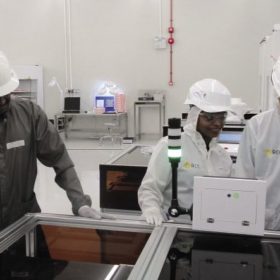
Higher performance with bigger modules a ‘no brainer’
Jan Bicker, who replaced Steve O’Neil as the CEO of REC on March 1, says that one of his top priorities is the ongoing development of the company’s Alpha PV modules. REC plans to unveil new, more powerful panels soon, and will make a final decision on a new factory in France in June.
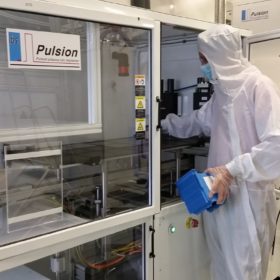
Indium-free passivated solar cell with 22.4% efficiency
French research institute Liten has built the device with a new cell architecture that combines ultra-thin polycrystalline silicon layers with films of passivated transparent conductive oxide (TCO) contacts.
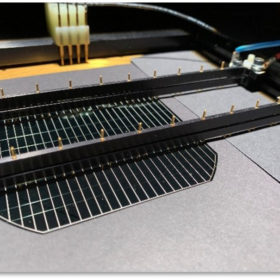
Evaluating tandem cells, from the bottom up
Scientists in Germany evaluated multiple silicon cell concepts based on both cost and efficiency in serving as the bottom layer in a perovskite-silicon tandem cell. The study, based on both simulation and experimental work, outlines advantages to various approaches with the silicon cell and concludes that in almost every case, perovskite-silicon tandem cells have the potential to bring solar costs down below what could be achieved with silicon alone.
China’s Jinergy bets on heterojunction
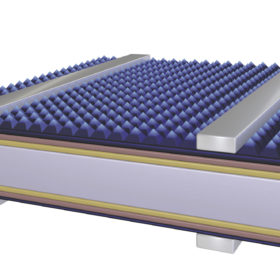
China reportedly has 10 GW of heterojunction cell capacity already up and running or under construction. Liyou Yang, general manager at Chinese state-owned manufacturer Jinergy that as costs for the technology continue to fall, more manufacturers in Asia can be expected to make the switch.
Chinese PV Industry Brief: Trina acquires Enclave, Sungrow secures EPC contracts for 300 MW
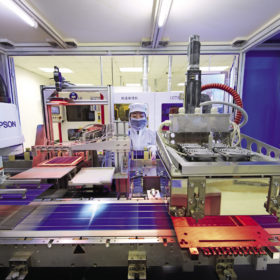
Module manufacturer Trina Solar has completed the acquisition of the Spanish tracker company, inverter maker Sungrow has secured contracts from Three Gorges New Energy and Akcome Technologies has completed construction of its heterojunction cell and module factory.

Heating up the heterojunction-LID discussion
Scientists led by the University of New South Wales have looked into the long-term degradation of silicon-heterojunction. Their findings suggest that illumination at high temperatures could actually improve cell efficiency, but also risks activating multiple light-induced degradation mechanisms if not carefully controlled.
Modular systems to produce perovskite-silicon cells on six-inch wafers
Researchers in Germany are scaling up efforts to bring perovskite-silicon tandem solar cell technology into industrial scale production. The scientists say manufacturing cells of that kind is possible on widely-available six-inch silicon wafers and modular systems are being designed to do so at scale.
Panasonic abandons Chinese solar manufacturing tie-up
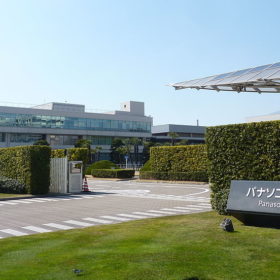
The Japanese electronics giant said a partnership with GS-Solar will not materialize and it will continue producing its modules in Japan and Malaysia while seeking other cooperation opportunities.
Meyer Burger secures creditor approval to buy SolarWorld factory in Germany
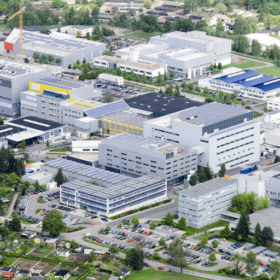
Creditors of SolarWorld Industries have approved the sale of a production facility to Meyer Burger. The Swiss tech group plans to manufacture highly efficient solar modules at the plant.
