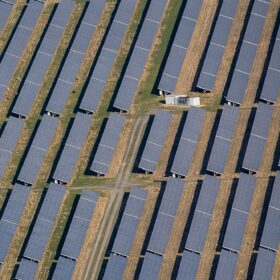
PV string fault detection technique based on multi-layer neural network
Scientists in India have proposed using a multilayer neural network to find line-to-ground, line-to-line, and bypass diode faults in PV module strings. They tested the new approach on a 22.5 kW solar array and reportedly achieved “competitive” accuracy results.
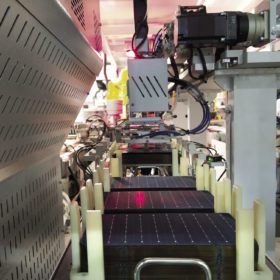
India’s PV module exports hit $1.9 billion in fiscal 2023-24
India’s solar module exports hit $1.9 billion in fiscal 2023-24, with shipments to the US market accounting for the lion’s share of the total.
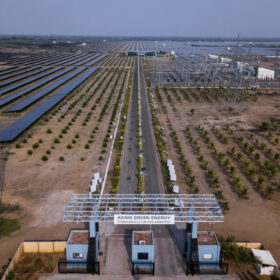
India set to install 21.2 GW of solar in fiscal 2025
JMK Research projects that 21.2 GW of new solar capacity will be installed in India in fiscal 2025. The new additions will include 16.5 GW of utility-scale PV, 4 GW of rooftop solar, and 700 MW of off-grid installations.
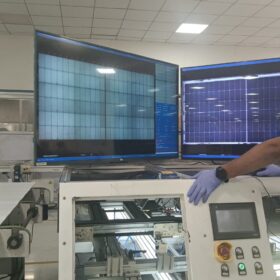
Waaree Energies to supply 445 MW of bifacial solar modules to Statkraft India
Waaree Energies says it will supply 445 MW of its 540/545Wp dual-glass PV bifacial modules to Statkraft India’s single-location solar projects in Rajasthan, India.
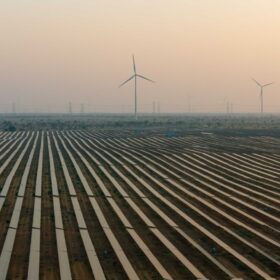
India to add 14.5 GW of PV per year in fiscal 2025, 2026
India Ratings and Research says India will maintain its current pace of renewable-energy capacity additions due to a significant drop in equipment prices and ongoing policy support.
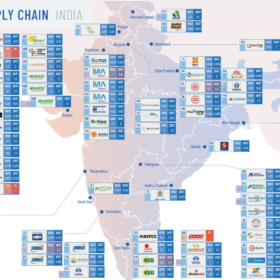
Sinovoltaics charts growth of PV manufacturing in India
The latest supply chain report from the Hong Kong-based technical compliance and quality assurance company covers India, providing information about current and planned capacity at 116 manufacturing plants.
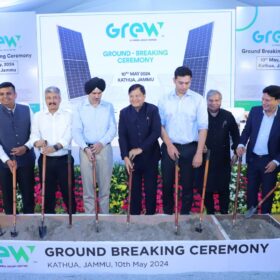
Grew Energy begins work on 3.2 GW ingot-module factory in India
Grew Energy has started building a 3.2 GW ingot-module factory in India. The facility will produce 2.8 GW of ingots, wafers, and cells per year, along with 3.2 GW of high-efficiency PV modules.
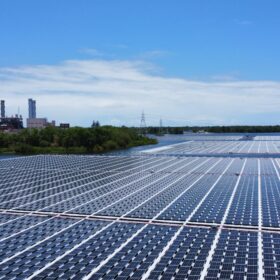
New study shows India has 207 GW of floating solar potential
A new report prepared under the Indo-German Technical Cooperation on Innovative Solar provides a comprehensive overview of floating solar potential in India. It also provides projections for installations from 2024 to 2040.
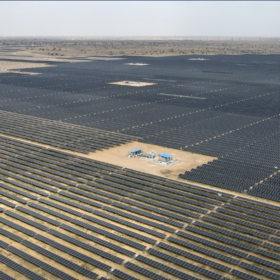
India’s renewable tenders hit 70 GW
India has accepted bids to set up 69.8 GW of renewable energy capacity, far surpassing its annual bidding target of 50 GW in fiscal 2024. Activity surged due to large-scale potential for market growth, central government support, and higher operating margins.
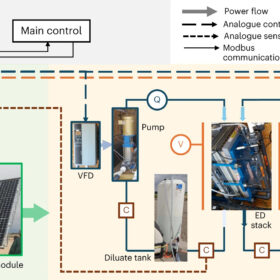
Novel PV-driven desalination tech achieves lower levelized cost of water
Scientists led by the Massachusetts Institute of Technology (MIT) have designed a new PV-powered desalination system based on the time-variant electrodialysis reversal (EDR) technology. The proposed system reportedly achieves lower levelized cost of water than conventional solar-powered desalination techs.
