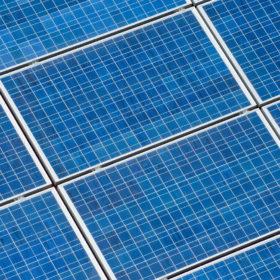
Game theory for solar module manufacturing
Researchers in Iran have applied the Stackelberg leadership model to determine whether the creation of a closed-loop solar module supply chain – including panel refurbishing – is feasible. According to their findings, a similar supply chain may only be set up with public subsidies, which would ensure that costs for R&D, module production, and recycling are distributed between the government and all the chain’s players.

Covid-19 delayed 63% of India’s planned big solar in first quarter
Coronavirus-related disruption severely impacted solar installation during the first three months of the year, as the nation added only 689 MW of utility scale PV, against the 1,864 MW that was scheduled to be commissioned.

Solar tariffs of less than $0.034 not financially viable in India
Solar developers in India must consider a range of risks to secure reasonable returns on solar projects, according to research by the Institute for Energy Economics and Financial Analysis and JMK Research & Analytics.

Indian renewables-plus-storage tender secures power for $0.038/kWh
Winning developer Renew Power can opt for solar, wind or hybrid plants along with energy storage systems to ensure round-the-clock power supply.

Drones can drive down operational PV costs
In a recent interview with pv magazine, Supreeth Srinivasa Rao – associate director of the industrial practice at Frost & Sullivan – explained how drones can minimize the need to send employees to project sites, as they can be deployed for monitoring, operations, and maintenance purposes.

India installed 1.53 GW of rooftop solar in 2019
The country’s cumulative installed rooftop solar capacity reached 5.4 GW by the end of December. The Indian government now aims to deploy 40 GW of rooftop PV by the end of 2023.

Indian Railways tenders for 1 GW of solar
Developers have until June 30 to lodge bids to develop plots of solar capacity across the national rail network which offer a maximum INR2.71/kWh ($0.036) for the electricity generated under a 25-year contract.
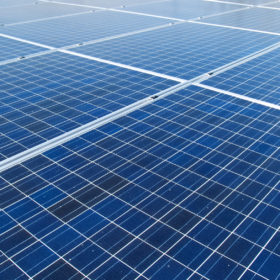
US investor buys 317 MW of solar in India
Marking its second infrastructure investment in India, U.S.-based KKR will acquire 169 MWp of Mumbai-based Shapoorji Pallonji Infrastructure’s solar assets in Maharashtra and 148 MWp in Tamil Nadu for a sum of Rs 15.54 billion (approximately US$204 million).
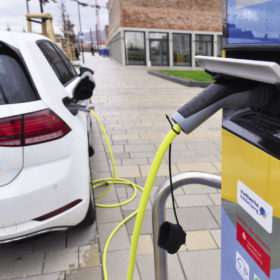
Sodium-ion battery manufacturing in India
UK-based sodium-ion battery technology developer Faradion has bagged its first order from ICM Australia and is looking at India as the next destination for manufacturing, with its initial target set at 1 GWh.
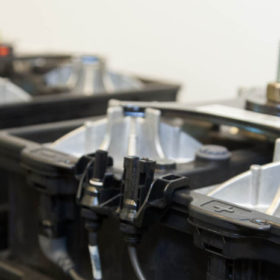
Low-cost bio-inspired electrocatalyst for rechargeable metal-air battery
Indian scientists have developed a low-cost electrocatalyst based on iron, manganese and N-doped carbon derived from fish gills (Fe/Mn/N-FGC) to increase the performance of a homemade rechargeable zinc-air battery. The Fe/Mn/N-FGC cathode-based battery achieved open-circuit voltage of 1.41 V and a large power density of 220 mW/cm2 at 260 mA/cm2 current density – compared to 1.40 V and 158 mW/cm2 for a commercial platinum/carbon-based battery – with almost stable charge-discharge voltage plateaus at high current density.
