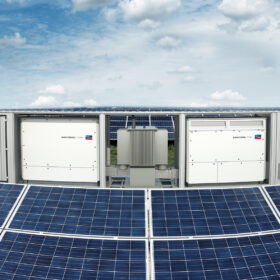
Using commercially available inverters for daylight photoluminescence imaging
An Australian research group has used an SMA inverter to switch the operating point of a PV array and has demonstrated its ability to create photoluminescence images for both rooftop and large scale solar installations.
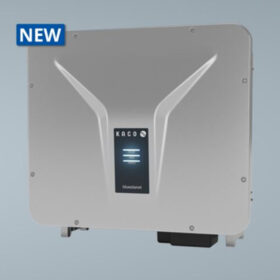
Kaco launches new inverters for complex roof architectures
The new products are intended for applications in commercial and industrial PV projects. The devices feature an efficiency rating of up to 98.1% and a European efficiency of up to 97.8%.
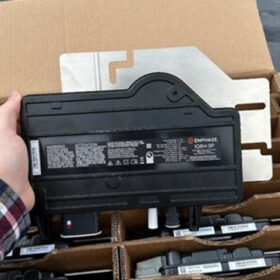
Enphase Energy, Octopus Energy announce UK partnership
Enphase Energy says that Octopus Energy’s retail customers will be able to integrate solar and battery systems into their energy plans in the UK market, with the introduction of Enphase IQ8 microinverters and the IQ battery 5P platform.

What could happen to solar inverters in case of high-altitude nuclear weapon testing
Researchers in the United States have investigated the sensitivity of PV inverters to the ectromagnetic pulses caused by high-altitude nuclear explosions during nuclear weapon testing. Their work presents several protection strategies aimed to improve the inverters’ immunity levels.
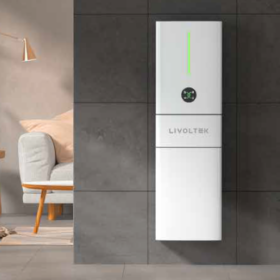
Livoltek releases all-in-one storage system for residential applications
Livoltek has developed an all-in-one storage system for residential applications, featuring a storage capacity of up to 25 kWh and compatibility with five different inverter models, as well as the option to integrate with electric-vehicle (EV) chargers.
Belgian grid operator pays for residential PV curtailment
Fluvius, Belgium’s electricity grid operator, says it will compensate residential PV systems at €10.60 ($11.49) per kVa if they are not reconnected within 30 working days after a curtailment event.
Autarco releases three-phase hybrid inverters
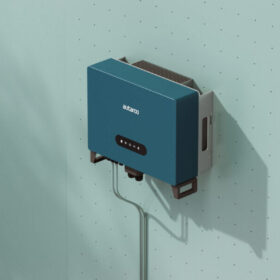
Autarco has developed a three-phase hybrid inverter line, featuring 8 kW, 9.6 kW, 12.8 kW, and 16 kW versions and up to four independent maximum power point (MPP) trackers, along with a European efficiency rating of 97.5%.
Solplanet launches new inverters for rooftop installations
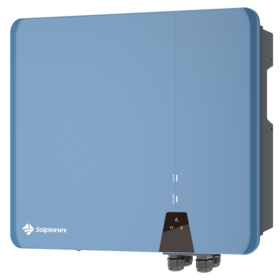
Solplanet, a China-based inverter manufacturer, says its new three-phase hybrid inverter series includes four versions with power ratings of 25 kW to 40 kW. They feature efficiencies of up to 98.4% and a maximum input voltage of 1,100 V.

Cameroon exempts imported PV components from customs duties
PV modules, inverters, charge controllers, batteries and cables intended for rooftop solar systems will benefit from exemptions from customs duties until 2025.
Inverter undersizing not universally effective to reduce soiling losses
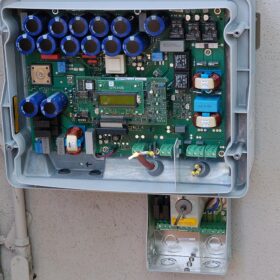
An international research team explained that, although inverter clipping is initially effective in mitigating soiling losses, these losses could become more visible with time, as solar module degradation makes clipping less frequent. They also warned that inverter undersizing alone may not be enough to mitigate soiling losses and suggested cleaning as an additional way to reduce them.
