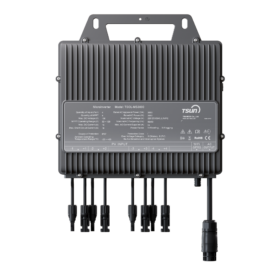
TSUN unveils new series of microinverters
TSUN’s new microinverter series has an input current of up to 18.5 A and an efficiency rating of up to 97.2%. The manufacturer claims it is particularly suitable for complex installation environments.
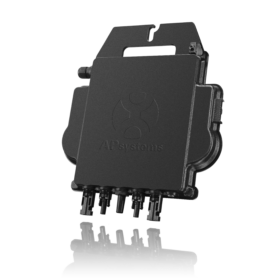
APsystems releases microinverter for balcony PV systems
APsystems has developed an EZ1 microinverter with an efficiency rating of 97.3% and a nominal maximum power point tracker (MPPT) efficiency of 99.5%. It can be connected to two high-power solar modules.
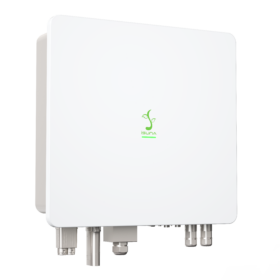
Sinexcel unveils silicon carbide hybrid inverters for residential applications
Sinexcel’s new inverters offer an efficiency rating of 97.5% to 98.0% and a European efficiency range of 97.2% to 97.5%.
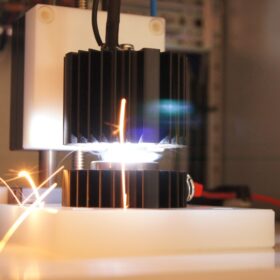
Fraunhofer ISE proposes new standard for inverters with arc fault detectors
The Fraunhofer Institute for Solar Energy Systems (ISE) has replaced the 2011 UL 1699B standard with its new IEC 63027 standard for inverters, incorporating arc fault detectors. The objective is to improve safety and efficiency in inverter technology.

US solar installers list Qcells, Enphase as top brands
A recent industry survey led by SolarReviews and the North American Board of Certified Energy Practitioners (NABCEP) shows that two-thirds of all solar installers expect high electricity prices to drive demand.
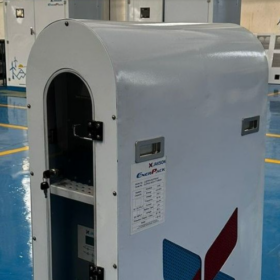
Jakson unveils lithium battery inverter for residential applications
India’s Jakson says its new lithium battery inverter offering consists of a 3 kW battery energy storage system with a 3 kW hybrid inverter and a 4.8 kWh, 48V lithium-ion battery module. It can be expanded to megawatt scale, depending on power backup requirements.

Clementy Group terminates €95 million proposal to invest in Fimer
Clementy Group – a UK-based investment firm – has decided to scrap its plans to invest €95 million ($104.5 million) in Fimer, as the Italian inverter maker’s shareholders have reportedly failed to issue shares that were needed for the investment. Fimer originally filed for creditor protection in February 2022.
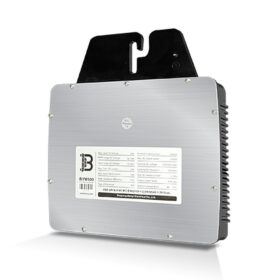
Beny Electric presents 600 W microinverter for balcony solar modules
Beny Electric’s new 600 W microinverters are designed for balcony solar modules, with a 96.5% efficiency rating and a European efficiency of 96%. They are available in three versions, with outputs of 500 W, 550 W, and 600 W.
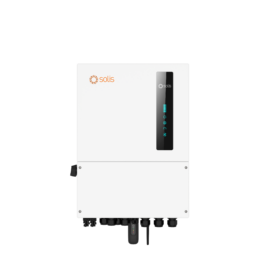
Solis unveils hybrid inverters for rooftop applications
Solis has released a new line of hybrid inverters in five different power output versions, ranging from 3 kW to 8 kW. The hybrid inverters can be used with either lithium-ion or lead-acid batteries, with a maximum charging and discharging current of 190 A.

SMA Solar begins work on 20 GW inverter factory in Germany
SMA says its total inverter capacity will double to 40 GW once its new factory is fully operational in Niestetal, Germany.
