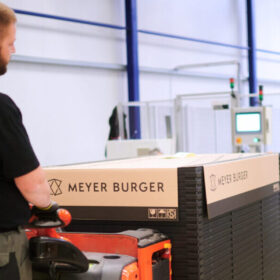
Meyer Burger’s German subsidiaries file for insolvency
Meyer Burger said it filed for insolvency for its German subsidiaries, following intensive efforts to keep Meyer Burger Industries GmbH and Meyer Burger Germany GmbH operational.
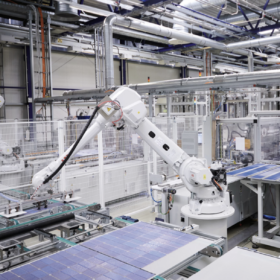
Meyer Burger lays off 283 solar production workers in Arizona
Meyer Burger began manufacturing heterojunction (HJT) modules in the United States nearly one year ago, but ran into trouble less than six months later after a large purchase agreement was terminated.
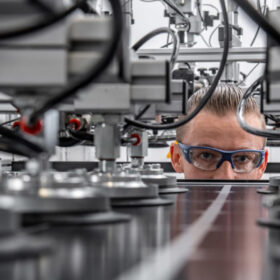
Meyer Burger loses biggest customer, questions business viability
Swiss solar manufacturer Meyer Burger faces a significant setback as its largest U.S. customer, D.E. Shaw Renewable Investments, has terminated a long-term agreement to purchase solar panels from its Arizona facility.
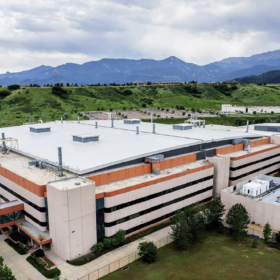
US solar factories: From announcements to reality
Now that incentives from the US Inflation Reduction Act (IRA) are well understood, global manufacturers are announcing factories in the United States to constitute much of the solar supply chain. While some plans have been scrapped already, and more cancellations are expected, the broader trend is unprecedented growth.
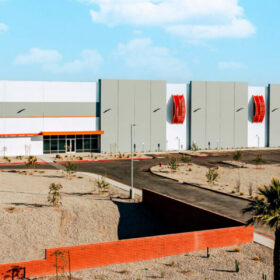
Meyer Burger cancels US solar cell plant, announces restructuring
Colorado Springs solar cell plant halted as Swiss-German PV manufacturer announces company restructuring plans. Planned capacity expansion at Arizona module production plant also put on hold. Existing cell production site in Thalheim, Germany, to remain part of Meyer Burger operations.
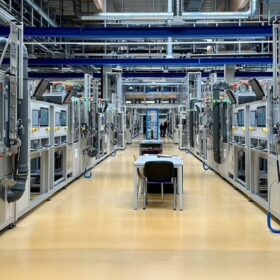
Meyer Burger and Solestial aim to conquer space
The companies want to develop cost-effective and efficient photovoltaic products for space applications using next-generation, ultra-thin, radiation-resistant solar cells. Starting next year, hundreds of vehicles for space travel could be equipped with the flexible modules.
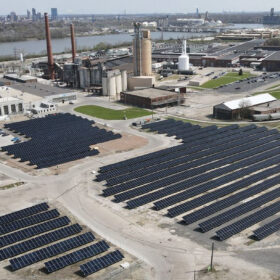
US, Canada ramp up solar glass plans
With PV module capacity ramping up, glass suppliers have been investing in new solar glass production capacity. As in India and China, new facilities are popping up in North America, with unique twists to ensure competitiveness, such as using recycled material.
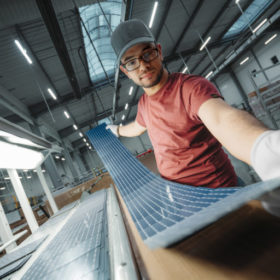
Systovi searching for buyer due to ‘Chinese dumping’
French PV module maker Systovi, facing a sharp drop in orders, is seeking a buyer for its design, production, and commercial activities. It has been manufacturing solar energy equipment since 2008 at its Carquefou factory near Nantes, France.
Weekend Read: Thin prospects
The production of PV ingots and wafers remains the most highly concentrated of all the production stages in the silicon solar supply chain. Yet efforts to re-establish production in Europe and the United States are not for the faint-hearted.

Why the EU should avoid PV protectionism
Rather than pondering the introduction of trade measures against solar imports, Europe should be pragmatic about its short-term reliance on Asian panels while moving now to nurture and incentivize a domestic supply chain of the future.
