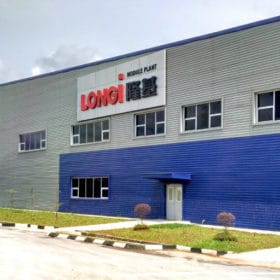
Longi Solar signs 200 MWp mono PERC supply deal in Vietnam
The Chinese solar manufacturing giant will supply its latest modules to Singapore-based PV developer Hexagon Peak for a utility scale pipeline in Vietnam.
The weekend read: Next steps for HJT
There is movement in the heterojunction space, but will it be enough to surpass PERC’s momentum? New production lines show promise, but they might also be the last roll of the dice for Swiss production equipment supplier Meyer Burger.

Roth: Trump administration could end bifacial tariff exemption
The U.S. Trade Representative has not responded to claims it will end the exemption from Section 201 duties. If true, the development could be a big hit for Asian PV manufacturers and an annoyance for the U.S. market – but a positive for First Solar.

PERC cells: From shortage to surplus
After the “June rush” to complete solar projects in China – as well as the commissioning rush in Vietnam, which saw higher-than-expected demand of 4 GW in the first half – the growth of the regional solar market started to slow down in July and August, before anticipated Chinese demand picks up the slack again. With unexpectedly low demand in the third quarter, module manufacturers reacted first by marginally reducing utilization rates. Cell producers then cut production after cell prices collapsed.

A common language for bifacial PV
This week pv magazine was in Amsterdam for the sixth edition of the BifiPV workshop, where the discussion focused on the impressive achievements made by bifacial solar modules and the challenges the technology faces as it moves toward mainstream adoption.

Solar pioneer Pierre Verlinden: The big problem is apathy
On the first day of this year’s EU PVSEC conference, veteran solar researcher Pierre J Verlinden won the Becquerel Prize for Outstanding Merits in Photovoltaics. The award recognized more than 40 years as a leading PV researcher in academia and at leading companies including Sunpower and Trina Solar. Its recipient spoke to pv magazine about what is needed from solar to stave off catastrophic climate change.
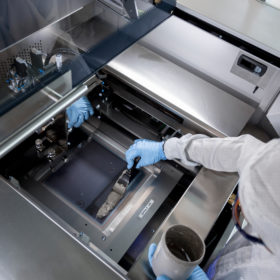
New metallization process cuts silver demand for modules by 30%
Fraunhofer ISE has worked with German technology companies to improve the metallization process in silicon solar cells. The result could drive down module costs quite a bit.
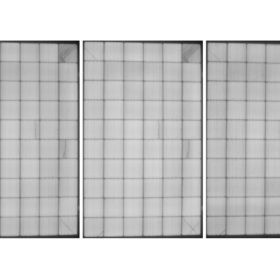
Tuesday webinar: New test for microcracks will ‘push the industry to exceed benchmarks’
A new test design from the University of Central Florida has challenged modules with different cell technologies. The results show advantages for the heterojunction modules tested. Here we discuss the new method with its designer.
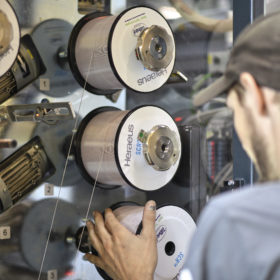
Heraeus claims module output increases by 2.1% with new ribbon
The performance of the company’s Selectively Coated Ribbons was measured for more than a year in a field test. Heraeus says the yield gains are achieved by the device’s optical properties – said to enable improved reflection – even at low angles of incidence and in low-light conditions.
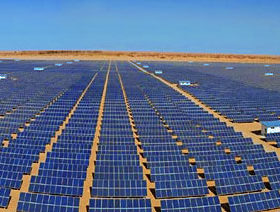
China electric utility attracts record low module price in 3 GW procurement
The state-owned State Power Investment Corp Ltd has received a bid of 25 cents per watt for monocrystalline panels in a tender to procure 3.04 GW of PV module capacity.
