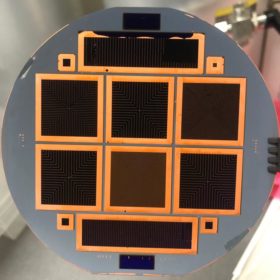
Silicon heterojunction solar cell with 23.83% efficiency via molybdenum oxide hole collector
Dutch scientists have achieved a record-breaking efficiency for a silicon heterojunction solar cell fabricated with a hole collector based on a molybdenum oxide (MoOx). They used plasma treatments to increase the presence of oxygen in the MoOx layer, to improve its electronic properties.
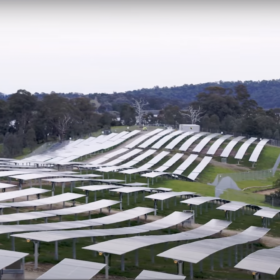
Terrain-following trackers evolving in Australia’s uneven market
Australia’s two main tracker companies, Nextracker and Array Technologies, are launching terrain-following products to mitigate and even eliminate the need for earthworks on site, opening up previously unsuitable land for solar.
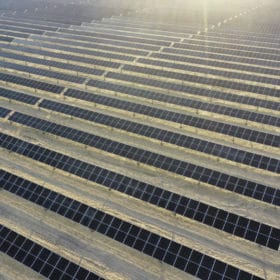
Oman kicks off tender for 500 MW solar park
The Omani authorities aim to develop a 500 MW solar project in Ibri, in northwestern Oman, where other PV facilities are located. It will be commissioned by the fourth quarter of 2026.
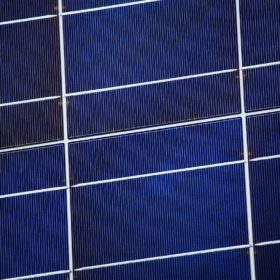
US solar modules 107% more expensive without global supply chains
Researchers say that from 2008 to 2020, the globalization of solar module manufacturing saved $67 billion for US, German, and Chinese solar installers, even though it was dominated by Chinese investment.
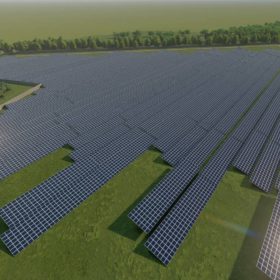
Construction begins on El Salvador’s first state-owned solar park
El Salvador’s Lempa River Hydroelectric Executive Commission (CEL) has started building a 17 MW solar park. It is the first to be owned, designed, planned and executed by the national authorities. It is scheduled to start operations in December 2023.
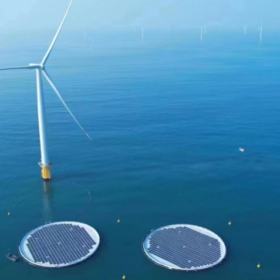
SPIC, Ocean Sun switch on offshore floating solar-wind pilot
State Power Investment Corp. (SPIC) has started operating the world’s first offshore floating solar plant integrated with an offshore wind turbine, at a pilot site off the coast of China’s Shandong province. It features floating PV tech from Norway’s Ocean Sun.
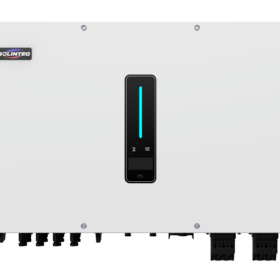
Solinteg unveils hybrid inverter series for C&I applications
Solinteg is offering five versions of its new three-phase hybrid inverters, with nominal power ranging from 25 kW to 50 kW, an efficiency rating of 98.8%, a European efficiency of 98.3%, and up to 4 MPPTs.

German developers move forward on plans for 21 MW floating solar array
The city of Cottbus, Germany, has passed a resolution to expedite the development of a 21 MW floating solar project. It will be built on a former mine site, with construction set to begin in the spring of 2023.

Uninterrupted PV generation without storage
An Israeli scientist has proposed a way to achieve uninterrupted PV power on the moon without using energy storage. The proposal involves the installation of PV panels around a 360-degree latitudinal ring close to one of the moon’s poles. There would be no inter-array shading, and static vertical PV arrays and arrays mounted on single-axis vertical trackers could be viable mounting structures.
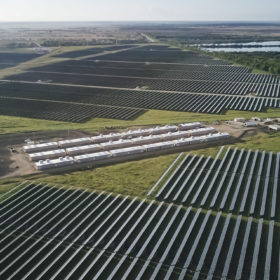
Operations begin at 87 MW solar-powered bitcoin-mining center
Aspen Creek Digital, a US bitcoin miner, has started operations at a 30 MW bitcoin data center powered by an 87 MW solar park in Texas. The project is the company’s second solar-powered bitcoin-mining center.
