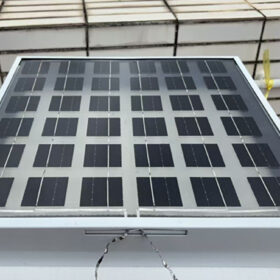
Thermochromic bifacial PV glazing system for reducing building cooling loads
Researchers in Hong Kong Hong Kong fabricated a thermochromic bifacial photovoltaic glazing system prototype that passively regulates solar heat gain while harvesting energy from both sides. Experiments and simulations showed it significantly reduces cooling loads and indoor temperatures while boosting electricity generation.

Ariston launches residential propane heat pump with built-in PV function
The Italian heating solutions provider said its new Nuos Plus S2 Wi-Fi heat pump system offers up to 80% energy savings and a coefficient of performance of up to 3.51.
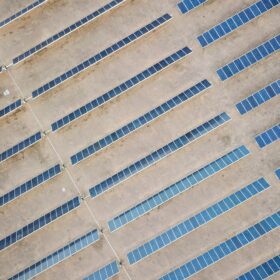
South Africa’s largest PV project reaches financial close
A 620 MW solar project to be constructed in South Africa’s Free State has reached financial close. The milestone follows the signing of a more than 20-year multi-offtaker wheeling agreement with commercial and industrial clients.

India’s PV module manufacturing capacity tops 210 GW
India added 119 GW of solar module capacity and over 9 GW of cell capacity in 2025, bringing total capacities to about 210 GW and 27 GW, respectively, according to Mercom India. Growth was driven by strong project demand and policy support, although supply-demand alignment is expected later in 2026 as domestic cell production ramps up.

Solar-to-X could redefine Iran’s energy future
Iran is widely known for its oil and gas resources, but its strongest long-term energy asset may be the sun. New research shows how solar PV could drive a cost-competitive transition across power, heat, transport, industry, and desalination, while opening the door to a broader Solar-to-X Economy.

China’s new five-year plan deepens shift toward focus on renewables system
China’s 2026 to 2030 policy plan elevates clean electricity as a central driver of economic growth, with greater emphasis on system integration and industrial use.

UAE installs around 1 GW of solar in 2025
Analysis from GlobalData finds the UAE’s cumulative solar capacity increased from 5.7 GW to around 6.7 GW last year. The country’s annual solar deployments are forecast to increase in the coming years, with 20 GW of installed solar expected by the end of the decade.

Survey reveals PV systems in Germany outperform lifespan expectations
Researchers analyzed 16 years of data from over 1 million PV systems in Germany and found annual degradation is just 0.52–0.61%, roughly half prior estimates. Environmental factors like heat, frost, and air pollution affect performance, while smaller systems degrade less than larger ones, boosting long-term reliability and profitability.

France selects six operators for PV module recycling capacity
France’s solar recycling body has selected Envie 2E, Galloo, Rosi, RVE, and First Solar to manage rising volumes of end-of-life panels, with combined capacity exceeding 45,000 metric tons (MT) per year.
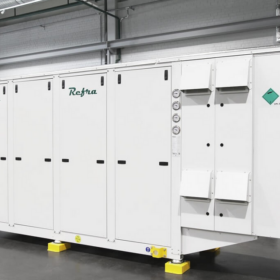
Refra debuts water-to-water heat pump for commercial, industrial use
Lithuania-based Refra has launched its Oasis series of water-to-water heat pumps and chillers, offering capacities from 34 kW to 600 kW for small to large commercial and industrial applications. Featuring propane refrigerant, inverter-controlled compressors, and modular multi-circuit design, the units can reach a coefficient of performance of up to 5.1.
