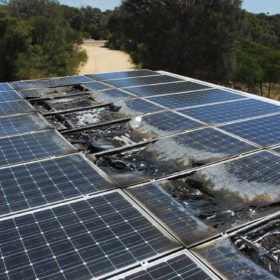
Australia removes much-criticized DC isolator mandate
Following years of lobbying, the Standards Australia Committee has removed the requirement for rooftop solar installations to include a DC isolator.
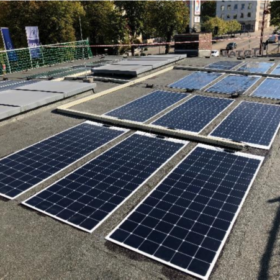
As Maxeon waits on potential U.S.-based solar cell fab, it launches Air panels in Europe
Maxeon exec Mark Babcock joined pv magazine to talk about Maxeon’s Air solar panels, and the company’s possible U.S. manufacturing expansion.
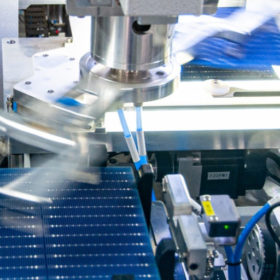
Austrian solar module manufactuer Energetica files for insolvency
The company had started manufacturing activities at its factory in Liebenfels in November 2019. It wants now to start a restructuring process.

First Solar signs multi-year deals for 5.4 GW of modules
Lightsource bp and bp placed orders for around 4.4 GW of modules, with options for an additional 1 GW.
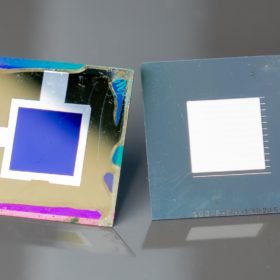
Helmholtz Center achieves 29.80% efficiency for perovskite/silicon tandem solar cell
The result was certified by Germany’s Fraunhofer Institute for Solar Energy Systems’ (ISE) CalLab and included in the charts of the U.S. Department of Energy’s National Renewable Energy Laboratory.
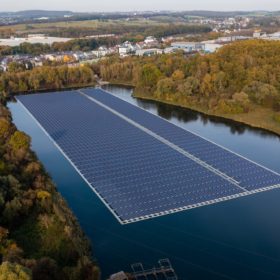
Luxembourg’s first floating PV plant is now operational
German renewable energy company Enovos and Luxembourg-based steelmaker ArcelorMittal have announced the inauguration of Luxembourg’s first floating PV plant. The facility was deployed with 25,000 solar modules on a former cooling pond owned by the steel manufacturer’s unit ArcelorMittal Differdange, which operates an electric steel plant in the homonymous municipality in Luxembourg. The project was […]
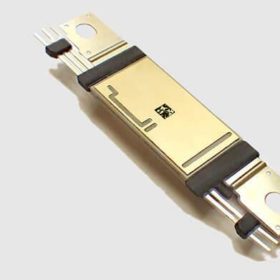
New efforts to bring silicon-carbide inverters closer to commercial maturity
U.S. multinational automotive supplier BorgWarner and U.S. semiconductor company Qorvo have both announced new plans to further develop their respective silicon carbide technologies. The latter has acquired New Jersey-based silicon carbide semiconductor provider United Silicon Carbide and the former wants to scale up its inverter technology for electric vehicles.

South Korea deployed 2.82 GW of solar in first nine months of 2021
In the third quarter of this year, around 677 MW of new PV systems were connected to the Korean grid, which is comparatively lower than in the same quarter a year earlier. According to local analysts, the market contraction is due to delayed permitting because of expanding siting restrictions.
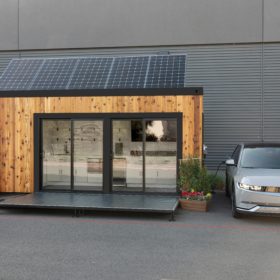
Hyundai creates platform to help homeowners buy solar panels, battery and EV charger
The one-stop marketplace platform will be launched in the US market next year. It will help homeowners find the best combination of products depending on their consumption profile.
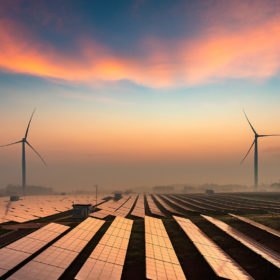
Giant green hydrogen project powered by 6 GW of off-grid solar and wind proposed for South Australia
Kallis Energy Investments is proposing a whopping 6 GW renewable hydrogen project in South Australia, with founder Terry Kallis telling pv magazine Australia the project will not seek to connect its 3 GW of planned solar and wind assets to the already congested grid.
