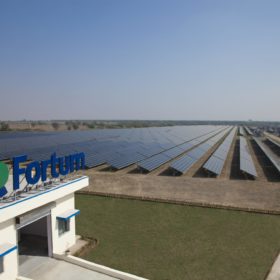
Fortum to sell off 500 MW of India solar assets to Actis
The Finnish utility, which works primarily on a build-operate-transfer model in India, has signed an agreement to divest its 250 MW solar plant in Karnataka and 250 MW in Rajasthan to UK investor Actis. The transaction is valued at approximately €280 million and will enable Fortum to invest in building new projects.
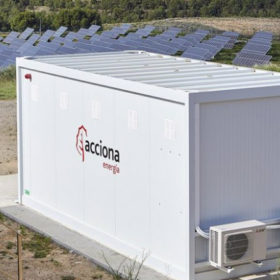
Storing solar power with recycled batteries from Nissan
Acciona is testing four second-life batteries with a combined capacity of 130 kWh at its 1.2 MW experimental solar park in Tudela, in the Spanish region of Navarra.
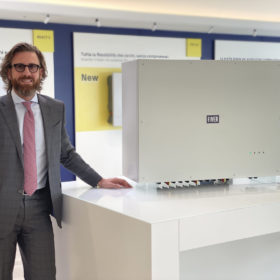
Fimer launches two new inverters for large scale projects
The Italian manufacturer has showcased a high-power multi-MPPT string inverter and modular conversion solution – designed to supply both decentralized and centralized systems.

New microinverter from the US
Yotta Energy’s new micro-inverter is claimed to be an ideal solution for commercial rooftop PV systems linked to between 500 kWh and 1 MWh of storage. The device has a peak efficiency of 96.5% and a nominal maximum power point tracking (MPPT) efficiency of 99.5%.
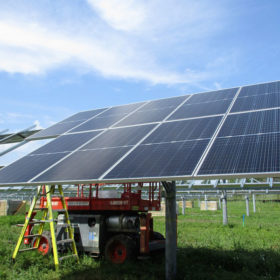
Quebec’s first solar plants come online
State-owned utility Hydro-Quebec has deployed its first 10 MW of ground-mounted solar to test the technology at the province’s latitude.

Solar manufacturing tax credit introduced in the U.S. Senate
The Solar Energy Manufacturing for America Act would establish a tax credit for domestic solar manufacturers in an effort to boost the U.S. solar supply chain, create American clean energy jobs, compete with Chinese manufacturers, and support energy independence.
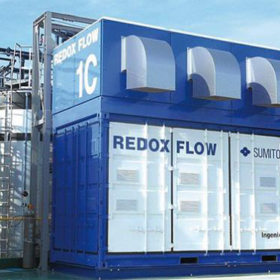
Malaysian green hydrogen project opts for Perth-based flow batteries
Australia-based TNG Limited has signed an agreement with Malaysian green hydrogen company AGV Energy which will see its vanadium redox flow batteries integrated into the HySustain project to store solar energy for green hydrogen production.

Solar energy collectors… grown from seeds!
Rice University engineers produced “near-perfect” 2D perovskite crystals for photovoltaic applications, grown from seeds.

The case for microinverters in Indian rooftop solar
Sunil Thamaran, India head for US company Enphase Energy, explains why microinverters are a good investment for rooftop solar. He also talks about the trends in microinverter design and the company’s plans in India.
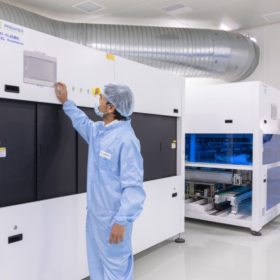
Premier Energies starts production at new Indian solar factory
The solar manufacturer has started trial production of high-efficiency solar cells at its new site in the southern state of Telangana. The fab can produce 19.2%-efficient multi-crystalline cells using MCCE textured black silicon, as well as making 22.5%-efficient mono PERC products.
