
‘The barriers I encountered were never dramatic, they were cumulative’
This week Women in Solar+ Europe gives voice to Delfina Muñoz, Research Director & Strategic Project Manager at France’s CEA. She says diversity is a catalyst for faster, fairer clean energy innovation. Inclusion, mentorship, and authentic leadership don’t just support people, they build stronger, more resilient teams that power the energy transition forward.
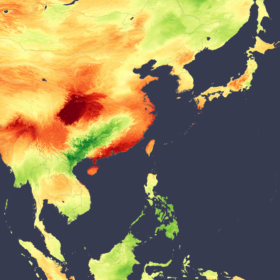
Clean Winter air drives major irradiance surplus across China and Taiwan in February
In a new weekly update for pv magazine, Solcast, a DNV company, reports that February saw a sharp East Asia solar divide, with southern China and Taiwan experiencing record-high irradiance due to clear skies and low aerosols, while maritime Southeast Asia faced heavy rainfall and below-average irradiance from enhanced tropical convection. The surplus in China was driven by atmospheric cleanliness, whereas Taiwan’s boost came mainly from persistently clear days, contrasting with widespread deficits across Indonesia, the southern Philippines, and nearby islands.
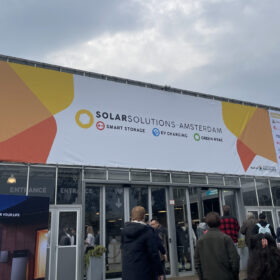
Key takeaways from Solar Solutions Amsterdam
The fourteenth edition of Solar Solutions Amsterdam showcased the latest technologies across solar, storage, electric vehicle charging and green HVAC. This year saw energy storage systems dominate the show floor, ahead of the event’s rebrand to Sustainable Solutions Amsterdam from next year onwards, reflecting the Dutch market’s position as a mature market increasingly focused on flexibility and the connectivity of different technologies within a single system.
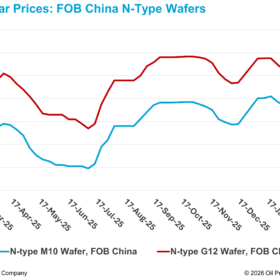
China wafer prices unchanged as resumed purchases fail to lift market
In a new weekly update for pv magazine, OPIS, a Dow Jones company, provides a quick look at the main price trends in the global PV industry.
Solar and the cyber winter
In an interview with pv magazine, cybersecurity expert Roberto Setola describes a structural shift in cyber threats against solar energy infrastructure, where attacks now target peripheral systems like remote terminal units rather than centralized SCADA, often in coordinated campaigns amplified by AI. He also emphasized that the recent cyberattack to PV plants in Poland demonstrated how simultaneous strikes on smaller, less-protected operators can potentially trigger major disruptions, including blackouts, economic losses, and cascading grid risks.

Morocco finally unlocks solar self‑consumption
Morocco has published the implementing decree for Law 82‑21, enabling self-producers to consume their own solar power and sell up to 20% of surplus energy back to the grid. The measure, effective 9 June 2026, sets clear tariffs and grid limits.

Sandia Labs benchmarks PV software providers in first ever blind comparison analysis
Sandia National Laboratories conducted the first-ever blind comparison of seven commercial PV modeling software, revealing that differences in weather handling, system modeling, derates, and assumptions grow as system complexity increases. The study emphasizes that software choice should consider project complexity, workflow, and modeling features rather than relying on rankings alone.
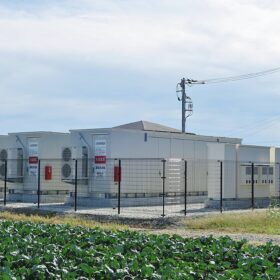
Panasonic claims world’s first trial of cybersecurity monitoring for grid-scale BESS
A Japanese joint-pilot will test grid-scale BESS with a range of local and remote attack vectors, with cybersecurity monitoring to watch for indications of anomalies.

Pakistan’s solar boom is bigger than official data shows
Pakistan’s Renewables First has explored the implications of a lack of official data collection from the country’s distributed solar market segment, which is estimated to have reached over 24 GW of installed capacity by the middle of last year.

Japan finances 130 MW solar project in Tunisia
The latest round of Japan’s carbon financing program, which provides financial support for low-carbon infrastructure projects in partner countries, is backing a 130 MW solar project being built in southeastern Tunisia.
