
Analysis shows large-scale PV still cheapest electricity tech in Australia
The Commonwealth Scientific and Industrial Research Organisation (CSIRO) GenCost report shows renewables remain the cheapest new-build electricity technology in Australia.

Silfab Solar secures funds to develop US-made back-contact n-type PV cells
Silfab Solar is one of seven recipients of US Department of Energy (DoE) funding for projects that will rely on dual-use PV technologies to electrify buildings, decarbonize the transportation sector, and reduce land-use conflicts.
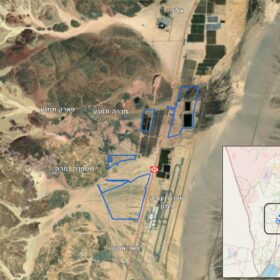
Israel to deploy 250 MW of floating solar, agrivoltaics
The Israeli authorities have proposed a plan to deploy 250 MW of floating solar and agrivoltaics through four PV plants in the Negev Desert near Ramon Airport.
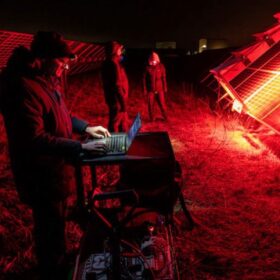
NREL-led consortium releases PV reliability forecasting tools
The Durable Module Materials consortium (DuraMAT) announced in its latest annual report the availability of new PV forecasting tools, and new research results towards the goal of more reliable PV modules.

Consumer knowledge key for solar adoption in Saudi Arabia
A new research paper urges the Saudi Arabian government to improve consumer knowledge of renewable energy to encourage the adoption of solar by domestic consumers.
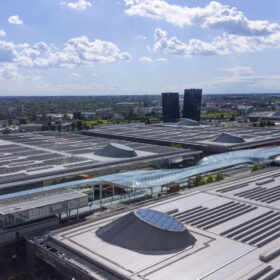
Fiera Milano switches on Italy’s largest rooftop PV array
Fiera Milano SpA has started generating electricity from Italy’s largest rooftop solar array. The trade fair organizer’s development partner deployed the 18 MW system on the pavilions of its exhibition center in Rho, near Milan.
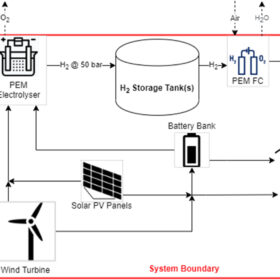
Hybrid hydrogen-battery system for off-grid PV-powered homes
Conceived by a Dutch research group, the proposed system is intended to store surplus renewable electricity via hydrogen generation and battery storage, with the latter being used only when hydrogen generation is not immediately available. Despite its high initial costs, the system can reportedly offer stable operation.
US trends for residential solar finance, equipment, maintenance
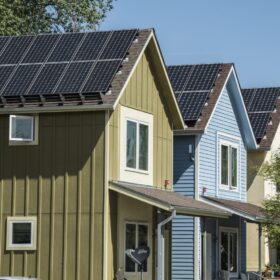
A new US solar installer survey covers typical loan terms, top equipment brands, and what to expect from system maintenance services.

Carbon-based perovskite solar cell without hole transport layer achieves 14.15% efficiency
Researchers in China have outlined a new surface engineering strategy to build low-cost solar cells without a hole transport layer. The devices were treated with benzoylcholine halide to reduce non-radiation recombination and achieved remarkable efficiency and stability.
European developer reaches financial close on 10 MW of solar in Tunisia
European renewables developer Qair will build a 10 MW solar plant in western Tunisia with a €3.9 million ($4.2 million) loan from the European Bank for Reconstruction and Development (EBRD), as well as to up to €1 million in concessional funding from Finland.
