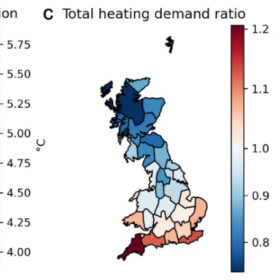
High-resolution model to identify hourly usage patterns of residential heat pumps
Developed by scientists from the UK and Spain, the new model uses high spatiotemporal resolution weather data and data from heat pump field trials. It finds “significant regional differences” compared to a British nation-wide estimation.
India’s solar installations hit 8.5 GW in first 9 months of 2023
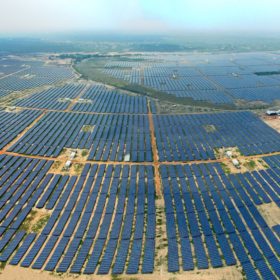
India installed 8.5 GW of solar capacity from January to September 2023, down 25% year on year, with a projected total of 11 GW for the 12 months to the end of December.
Solutions needed to future-proof big solar amid weather-related risks
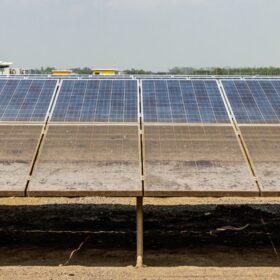
Extreme weather is a growing risk to solar farms. Future-proofing through advanced technologies, leveraging data from novel sources, and accepting risk is vital, but rarely achieved today for a number of reasons. Insurers, lenders, developers, contractors and manufacturers recently came together in Melbourne, Australia, to discuss solutions to the intractable problem of weather risk.

Dutch startup offers film that enhances efficiency of specialty PV modules
Mito Solar, a Dutch developer of lightweight PV modules, has developed a laminate film to boost the power generation capacity of specialty solar panels, such as those installed on solar racing cars and boats. The company claims the film may improve a module’s power conversion efficiency by up to 1%.
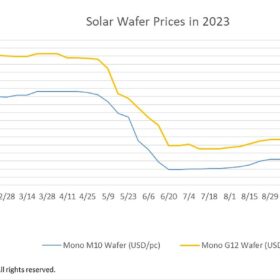
Solar wafer prices marginally rise, supported by currency exchange rate
In a new weekly update for pv magazine, OPIS, a Dow Jones company, provides a quick look at the main price trends in the global PV industry.

Ethiopia’s renewable energy sector hit by range of issues
Poor planning, overambitious projects and “weak” human and institutional expertise are just some problems plaguing the Ethiopian government’s best efforts to procure renewable energy projects, according to a new study.

New wall-mount lithium battery inverters from India
Exide, an Indian manufacturer, has entered the lithium-ion home power backup market with wall-mount lithium battery inverters ranging in size from 450 W to 720 W.

Israel to build energy communities in villages destroyed by Hamas
Israel’s Ministry of Energy and Infrastructure says it is currently developing a multi-year program for communities attacked by Hamas on Oct. 7. It aims to deploy 5 GW of energy in the destroyed areas, once residents return.
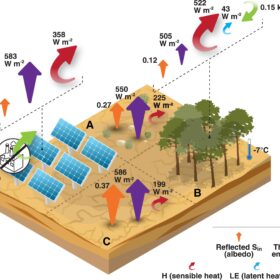
New research claims PV outperforms afforestation in combating climate change
Scientists from Israel have calculated how long it would take for PV plants and afforestation projects to offset their warming impacts caused by the darkening of land. The results showed that in drylands, PV fields could be over 50 times more efficient than afforestation.

REC closes Norwegian polysilicon production facilities
Solar manufacturer REC blames high electricity prices for the recent closure of two Nordic polysilicon production facilities.
