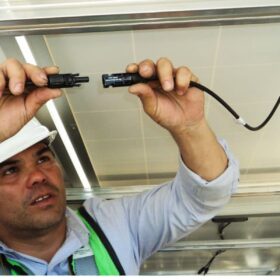
Main causes of solar performance issues
A new report by HelioVolta shows that 62% of inspected PV projects have critical or major issues.
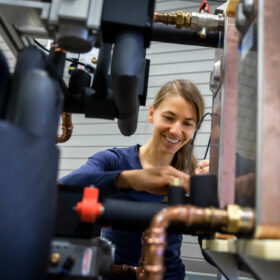
Fraunhofer ISE develops propane heat pump using only 146 g of refrigerant
Researchers at Germany’s Fraunhofer ISE have developed an optimized heat pump propane refrigeration circuit for single-family homes.
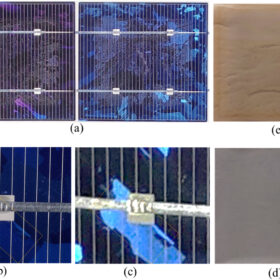
Keep your solar cells dry
Scientists in Norway used various imaging and characterization techniques to analyze the cells and other components of silicon PV modules that had been installed in the field for more than 10 years. The group’s aim was to isolate the role of moisture in various mechanisms that cause performance loss over time, and to understand how these mechanisms progress over long-term installation in real outdoor conditions.

Chinese PV Industry Brief: January-May solar installations hit 61.21 GW
The National Energy Administration (NEA) says China installed 61.21 GW of solar in the first five months of this year, bringing the nation to nearly 453 GW of cumulative installed PV capacity by the end of May.

IEA-PVPS releases global benchmark for solar irradiance data
IEA-PVPS has published a report to help the solar industry to choose appropriate surface radiation models and data providers based on location and application requirements.
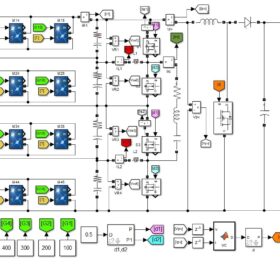
Rooftop PV system design to improve yield under partial shading
Scientists in India have proposed a new concept that improves the yield of rooftop PV systems under partial shading. This concept combines conventional total cross-tied (TCT) techniques with partial power processing converters (PPPCs), using a resonant switched capacitor converter (RSC) and a switch inductor converter (SLC).
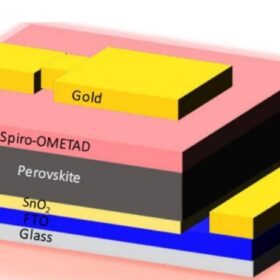
Triple cation perovskite PV cell with ETL based on tin(IV) oxide hits 17.1% efficiency
Qatari researchers have incorporated an electron transport layer (ETL) made of tin(IV) oxide into a perovskite solar cell through air-thermal-annealing, resulting in better efficiency and stability. The device demonstrated an open-circuit voltage of 1.045 V, a short-circuit current of 22.01 mA/cm2, and a fill factor of 74.3%.

What might UK solar expect from a change in government?
Chris Sparkes, lead technician at UK solar installer Solar Fast tells pv magazine simply throwing money at the PV industry will not suffice.
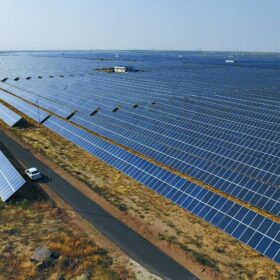
India’s SJVN tenders 1.5 GW of renewables with storage
SJVN Ltd., an Indian state-run hydropower producer, has issued a tender to select developers for 1.5 GW of firm and dispatchable power from renewable power projects with energy storage systems.

AD Green commissions 3 GW solar module factory in Vietnam
The new manufacturing facility is located in Thai Binh and will produce modules mainly for the US market. It currently has a capacity of 500 MW and is expected to reach 3 GW within 12 months
