
Eritrea launches tender for 30 MW solar plant
Eritrea has launched a tender for a 30 MW solar plant, featuring an undisclosed amount of battery storage and a 66 kV transmission line. The project could become the largest PV installation ever constructed in the country.
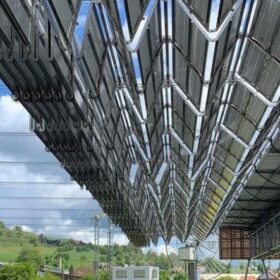
Foldable solar carport extends, retracts in response to weather
Switzerland’s Dhp Technology AG says it plans to deploy new retractable PV systems at 45 motorway service areas in the Swiss cantons of Valais and Bern. The foldable arrays can be retracted and protected during extreme weather conditions or hail storms.
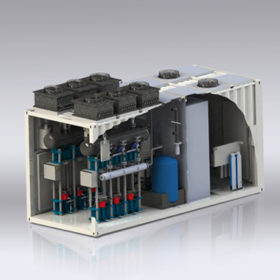
Novel algorithm to prevent overinvestment in power-to-gas in areas with high PV penetration rates
Scientists in South Korea have created an algorithm that reportedly prevents oversizing of power-to-gas systems located in areas with large shares of solar and renewable energy capacities. The algorithm calculates saturation points for both PV and power-to-gas facilities.
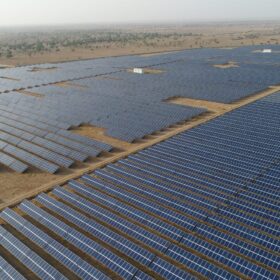
TotalEnergies acquires full stake in Total Eren
TotalEnergies has increased its stake in Total Eren from 30% to 100%, a transaction that values the independent power producer at €3.5 billion ($3.8 billion).
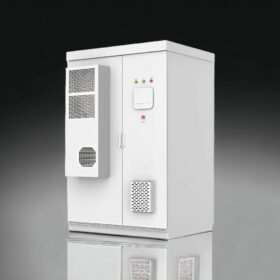
Chelion unveils scalable battery storage solution
Chelion Australia, an energy storage solutions specialist, has developed a new all-in-one lithium iron phosphate battery cabinet for commercial applications.
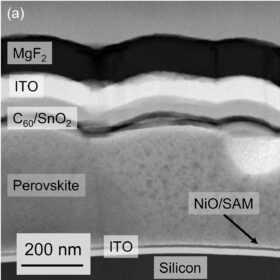
Monolithic perovskite-PERC tandem solar cell with 23.7% efficiency
Dutch scientists have developed a perovskite-PERC tandem solar cell based on a new type of tunnel recombination junction that reportedly offers an improved device efficiency distribution. The cell uses a nickel(II) oxide layer that is intended to reduce electrical shunts in the perovskite top cell.
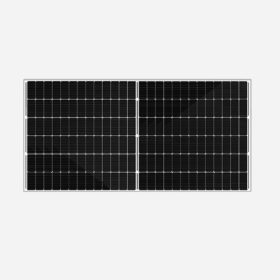
Navitas Solar sets up US manufacturing unit
Indian manufacturer Navitas Solar has collaborated with US-based Sustainable Equity and Colby Solar to set up a module factory with a manufacturing capacity of 1.2 GW per annum.
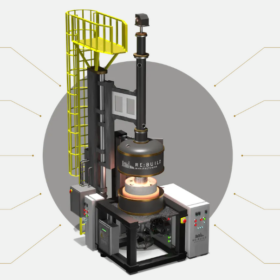
Re:Build Manufacturing introduces solar ingot processor
Massachusetts-based Re:Build Manufacturing has unveiled the RBM600 Solar CZ Puller, a solar ingot processor designed to manufacture high-purity polysilicon ingots for solar panels.
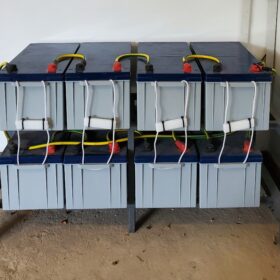
German consumer group debunks residential battery misconceptions
Verbraucherzentrale NRW, a German consumer protection association, has issued a warning about five misleading assumptions about PV-linked residential battery systems.
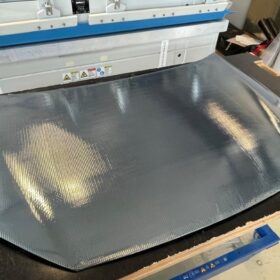
Fraunhofer ISE integrates solar cells into car hood
Germany’s Fraunhofer Institute for Solar Energy (ISE) has advanced vehicle-integrated PV (VIPV) technology by installing solar cells directly onto a standard sheet-metal car hood. The researchers placed a 115 W prototype array on the hood of a Volkswagen with a specialized lamination process.
