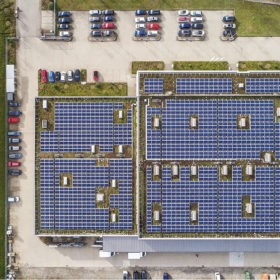
Weekend read: Is EU doing enough?
The European Union has set ambitious targets for solar PV expansion but is Brussels designing the right policies to support growth? Andreas Walstad investigates.
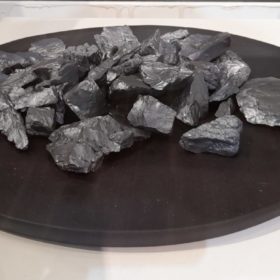
Polysilicon prices continue to drop
The China Nonferrous Metals Industry Association (CNMIA) says that polysilicon prices have fallen by more than 42% since November, when the raw material reached its highest price point.

Video: Singapore Solar Exchange CEO discusses polysilicon prices in 2023
Sakura Yamasaki, the founder and CEO of Singapore Solar Exchange, speaks to pv magazine about China’s recent decision to launch the trading of industrial silicon futures, following a year of high polysilicon prices. Yamasaki discusses the potential impact on polysilicon prices in China, the outlook for domestic price stabilization and risk mitigation, and what this might mean for the global solar industry in 2023.
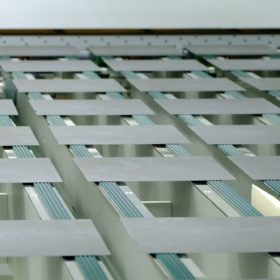
CubicPV plans 10 GW of conventional silicon wafer production
CubicPV, backed by $26 million in new funding, has announced plans to make silicon wafers in the United States, which would fill a critical gap in the US solar supply chain.
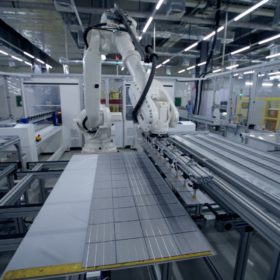
Adani moves forward with 30,000 MT polysilicon project in India
Adani has selected Engineers India Ltd. (EIL) to set up 30,000 metric tons (MT) of polysilicon production capacity and 500 MT of monosilane capacity in India.
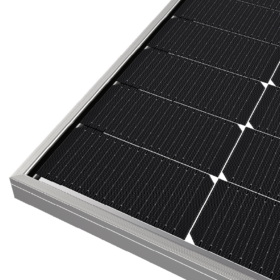
Chinese PV Industry Brief: JinkoSolar achieves 26.4% efficiency for n-type TOPCon solar cell
JinkoSolar has set another world record for n-type solar cell efficiency with its TOPCon tech, while Longi said it wants to build a 15 GW module factory in Anhui province.
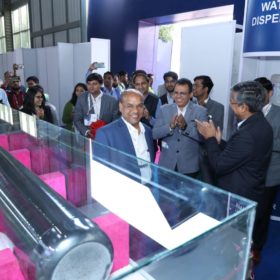
Adani unveils India’s first silicon ingot
Adani Solar revealed a monocrystalline silicon ingot this week at the Intersolar India 2022 expo. It produced the ingot at its Mundra facility in the Indian state of Gujarat.
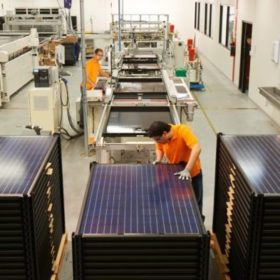
Australian science agency to back domestic silicon, solar supply chain
The Commonwealth Scientific and Industrial Research Organisation (CSIRO) has urged the Australian government to develop a domestic solar manufacturing industry. A new report warns that the high concentration of global silicon and PV cell supply chains pose real risks to the national energy security.
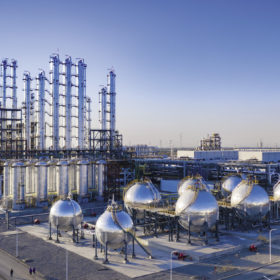
Chinese PV Industry Brief: Linyang Energy to build 20 GW TOPCon factory
Linyang Energy has revealed plans to build a new solar factory in Jiangsu province, while Daqo has said it will build a new silicon production base in Inner Mongolia.
Australian supply chains would benefit from addressing modern slavery issue
Australia’s Clean Energy Council and law firm Norton Rose Fulbright have published a white paper arguing that the country’s renewable energy supply chains could “benefit significantly” from a concerted effort to address forced labor.
