
Romania drafts cybersecurity rules for PV, cogeneration up to 1 MW
Romania plans to amend its energy law to require the National Cybersecurity Directorate (DNSC) to define technical standards for PV and cogeneration systems up to 1 MW, aimed at preventing data breaches and safeguarding grid operations.

Mexico targets up to 9.5 GW of solar and wind by 2030
Mexico’s Secretaría de Energía (Sener) plans to add 6.4 GW to 9.5 GW of renewable capacity while keeping state-owned CFE’s share above 54%, integrating storage and efficiency measures to stabilize the grid.
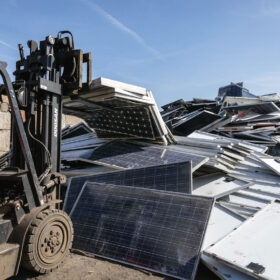
PV module recycling gains momentum as waste volumes surge globally
A comprehensive new report from IEA PVPS Task 12 reveals how countries around the world are managing the growing volumes of end-of-life solar modules, implementing regulations and scaling recycling infrastructure to handle the expected increment in PV waste over the coming decades.

‘I discovered the importance of letting results speak louder than words’
This week Women in Solar+ Europe gives voice to Maribel Gonzalez, Commercial Director Company at UK-based Brighter Green Engineering. She says breaking through traditional barriers required patience, confidence, and a focus on excellence. “Continuous learning became a personal compass; every challenge was a chance to adapt and grow,” she states.

Sunny summer forecast for South America despite La Niña
In a new weekly update for pv magazine, Solcast, a DNV company, reports that emergence of a weak La Niña in the tropical Pacific is expected to reinforce sunny conditions over the southern parts of the continent, including Chile, Argentina, and southern Brazil.

France certifies first solar panels eligible for reduced 5.5% VAT
France’s Certisolis approved four Voltec Solar panels and one Meyer Burger module with carbon footprints under 530 kg CO₂/kWp, making them potentially eligible for the country’s 5.5% VAT rate.
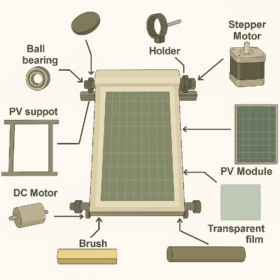
Solar panel cleaning based on rolling film, motors
Scientists in Morocco have developed a novel solar panel cleaning system designed to remove dust and bird droppings. Their prototype was built at a total cost of $386 and is ready to incorporate AI features in the future.

China’s polysilicon prices stabilize amid consolidation push
In a new weekly update for pv magazine, OPIS, a Dow Jones company, provides a quick look at the main price trends in the global PV industry.
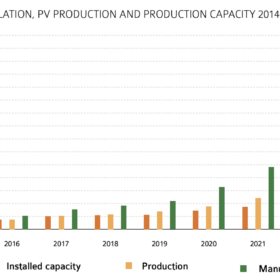
Thirty-five countries now operate GW-scale annual PV markets
The latest report from the International Energy Agency’s (IEA) Photovoltaic Power Systems Programme (PVPS) highlights that 2024 was another record year for solar installations but large overcapacities of solar cell, module and wafer manufacturing continued.
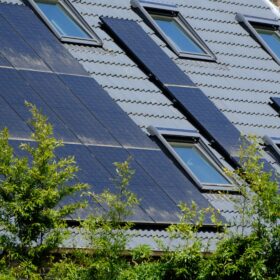
Ten reasons why behind-the-meter solar is a benefit
Behind-the-meter solar for homes, businesses, and communities comes with numerous benefits, said a paper from Stanford engineering professor Mark Jacobson.
