
Amazon invests in US-based solar cell production facility
Ambient Photonics will build a fully automated manufacturing facility to produce solar cells for powering consumer electronics.
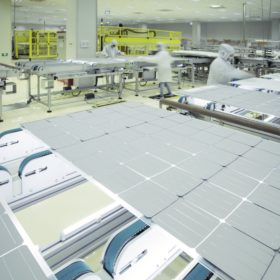
Chinese PV Industry Brief: Longi to build 20 GW solar module plant
Longi has revealed plans to build a new panel factory in Anhui province, China Huaneng Group has announced a 1.3 GW renewables project in Heilongjiang province, and JinkoSolar has issued a warning about rising polysilicon prices.
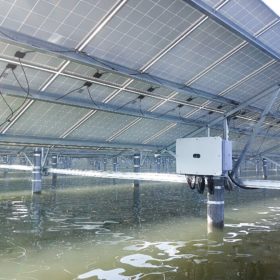
Lightsource bp to build 150 MW fishery solar farm in Taiwan
UK solar specialist Lightsource is developing a 150 MW solar park at a fishery in Budai, in Taiwan’s Chiayi county. Construction is expected to commence in June 2023.
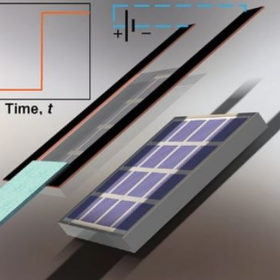
‘Pulsed Joule heating’ tech to remove snow, frost, ice from solar modules
US scientists have developed a way to remove snow and ice from solar panels at a much faster rate than conventional approaches. It is based on a glass coating on a film with high optical transparency and superhydrophobicity.
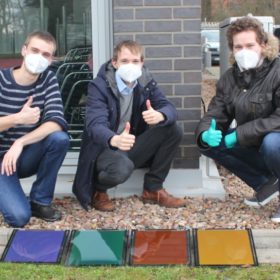
Novel way to turn semi-finished thin-film solar modules into colored BIPV panels
German scientists have developed a way to cut semi-fabricates into desired shapes and then apply a conductive oxide-metal-oxide electrode with the preferred color. They can structure the elements into modules via the backend interconnection process.
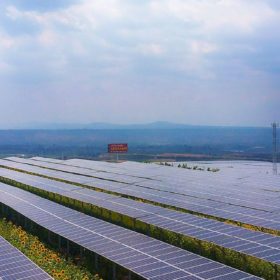
Global annual solar deployment to hit 1 TW by 2030
Major players in the solar industry, such as Longi Solar, are projecting accelerating growth over the near term.
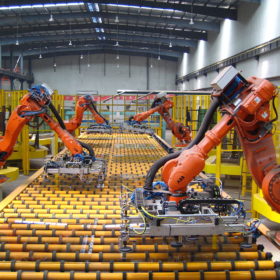
Alliaverre to produce solar glass in France
Alliaverre wants to move a 600 MW solar glass plant to Amiens, France, to reduce European customer delivery times, as it faces rising shipping prices and manufacturing constraints in Asia.
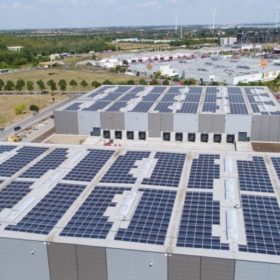
Germany concludes third rooftop PV tender with average price of €0.0853/kWh
Germany’s latest solar procurement exercise resulted in final prices of €0.07 ($0.073)/kWh to €0.0891/kWh.
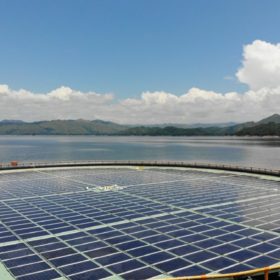
Small-scale floating PV with pumped hydro storage
Indian scientists have developed a system under which a pumped-hydro facility stores grid electricity during off-peak hours by pumping water to an upper reservoir. During peak hours, the system feeds the load, rather than taking power from the grid.
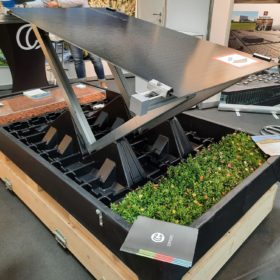
Smarter E products at a glance
pv magazine summarizes the products we covered at the recent Smarter E exhibition, in the first of a series of reports on all of the new releases from the annual trade fair in Munich, Germany.
