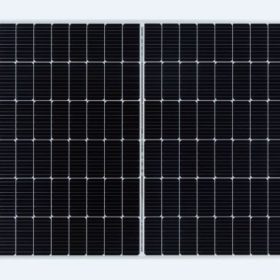
Talesun unveils 570-590 W solar module series
The new module series is available in five versions with power outputs claimed by Talesun of 570-590 W and reported efficiencies of 20.3-21.0%.

Solar Power International goes virtual
As Covid-19 cases surge across the United States, SPI has moved its October trade show from Las Vegas to the virtual world.

Solar modules with glass-enameled steel backs
U.S.-based Toledo Solar has secured a grant from the U.S. Department of Energy to conduct research on lighter, steel-backed solar modules.
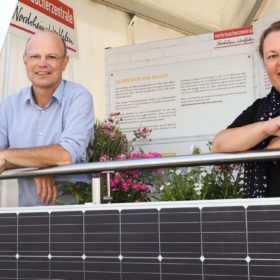
Germany’s untapped potential for balcony PV panels
In the German state of North Rhine-Westphalia, a balcony module, with an upfront investment of €350 to €500, can provide electricity with a current value of €54 per year. The payback period ranges from six to nine years.

Chinese PV Industry Brief: Higher cell prices and plans for 36 GW of new cell capacity
Chinese solar cell manufacturer Tongwei has raised its cell prices by 9% this week after having increased them by 10% three weeks earlier. Another cell manufacturer, Aiko Solar, has unveiled a plan to deploy 36 GW of new cell production capacity.

Jolywood announces bifacial panel with 615 W ouptut
Presented at the SNEC fair in China, the Niwa Super module series has a power output ranging from 570 W to 615 W and a reported efficiency of 22.1%.
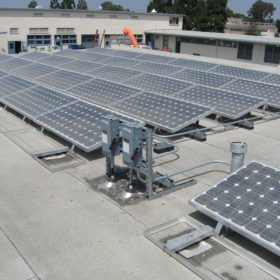
Photo-electrochemical cells vs. PV electrolysis
Dutch researchers have analyzed the two most promising solar-assisted technologies to produce green hydrogen, based on the levelized cost of hydrogen. They found that PV-powered hydrogen production offers the lowest costs, at $6.22/kg, with a solar-to-hydrogen efficiency ratio of 10.9%.
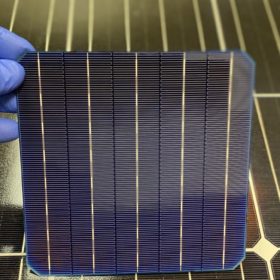
New PV cell architecture creates resistively bounded subcells
Solar Inventions, the winners of the first American-Made Solar Prize, plan to commercialize their newest product, which is claimed to reduce silver content and increase module power, while potentially saving manufacturers up to $1 million per year.
Indian hydropower company seeks EPC bids for 25 MW of floating PV
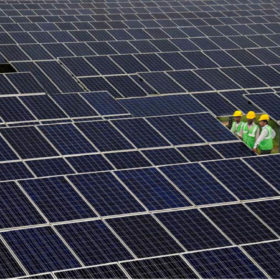
Bidders have until Aug. 25 to show interest in an engineering, procurement, and construction contract for a 25 MW floating solar plant in Khandwa district, in the Indian state of Madhya Pradesh.
PPA-linked 120 MW solar park goes online in Australia
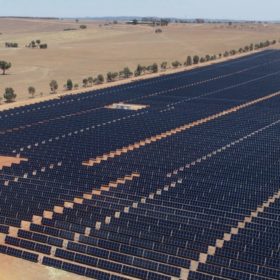
The 120 MW solar project near Wagga Wagga in New South Wales, the first renewable energy asset in the portfolio of network owner Spark Infrastructure, has achieved a critical milestone in the face of market challenges and delays.
