
Optimal solar module row spacing for agrivoltaics across Europe
Researchers in Sweden developed a new methodology to optimize agrivoltaic systems across Europe, showing that row pitch, system type, and panel orientation must be tailored to local climate, crops, and regulatory constraints.

France plans 2.9 GW of PV tenders despite lower 2030 target
France’s new Multiannual Energy Program sets a 48 GW solar target for 2030 and outlines 2.9 GW of tenders through 2028, with industry saying the framework restores investment visibility and supports gigafactory plans.
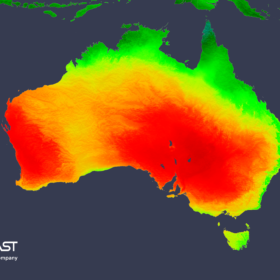
Hot, dry start to 2026 lifts Australian PV, despite fires and monsoon losses
In a new weekly update for pv magazine, Solcast, a DNV company, reports that most of Australia experienced above-average solar irradiance in January 2026 due to a hot, dry airmass and clear skies, boosting PV generation despite operational challenges from elevated temperatures, bushfire smoke, and dust. In contrast, northern Queensland and far northern regions saw significant irradiance deficits from persistent monsoonal clouds and Tropical Cyclone Koji, causing widespread rainfall and localized power outages.
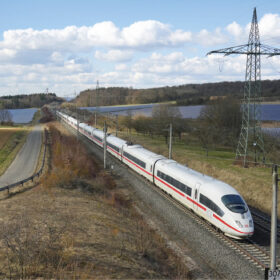
Germany awards 2.32 GW in large-scale PV tender
Germany’s latest tender for large-scale PV project concluded with an average final price of €0.0500 ($0.0593)/kWh. The procurement exercise was largely oversubscribed.
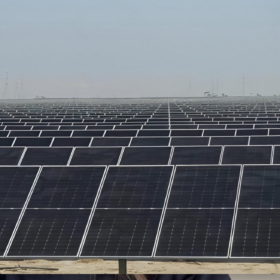
India installs record 36.6 GW of solar in 2025
India added 36.6 GW of solar capacity in 2025, up 43% from the previous year, with large-scale projects accounting for 81% of installations, according to Mercom India.

The impact of land slope on agrivoltaics feasibility
Brazilian scientists have developed a slope-based framework for agrivoltaics, finding that sites below 15% gradient offer the best balance between agricultural suitability and technical feasibility. Their review of 30 studies shows that steeper terrain can host PV systems with adapted designs, land-use limits, erosion risks, and rising installation costs.

Spain hits 50 GW solar milestone
Spain’s installed solar capacity reached 50 GW in early 2026 after adding about 8.7 GW in 2025, according to grid operator Red Eléctrica de España (REE).

The new rationale of the EU PV Market
In its first monthly column for pv magazine, the Becquerel Institute explains how solar PV continues its global expansion despite political uncertainty and market turbulence. In Europe, 2025 was a record year — but the underlying dynamics are becoming increasingly complex.
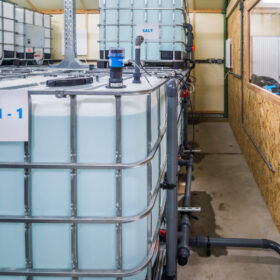
Long-duration storage as an antidote to grid congestion, renewables curtailment
RenewaFLEXNL, a three-year Dutch initiative led by TNO, aims to accelerate long‑duration energy storage (8–100 h) to reduce grid congestion and better integrate renewable energy. pv magazine spoke with the project coordinator, Iraxte Gonzalez Aparicio, about diverse storage technologies, real-world applications, regulatory guidance, and energy management system tools to support large-scale solar‑plus‑storage deployment in the Netherlands and beyond.

Agrivoltaics? Yes in my vineyard
Researchers in Spain surveyed 238 wine tourists in the Murcia region and found broad support for trellis-integrated agrivoltaics in vineyards, with 94% backing solar integration and most respondents seeing no landscape conflict.
