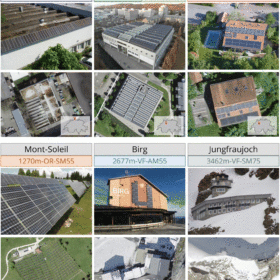
Study finds much lower-than-expected degradation in 1980s and 1990s solar modules
Researchers at SUPSI found that six Swiss PV systems installed in the late 1980s and early 1990s show exceptionally low degradation rates of just 0.16% to 0.24% per year after more than 30 years of operation. The study shows that thermal stress, ventilation, and material design play a greater role in long-term module reliability than altitude or irradiance alone.
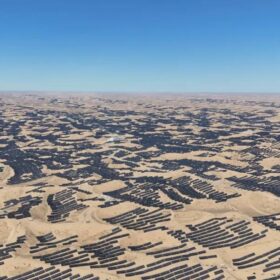
China adds 315 GW of solar in 2025
China installed a record 315 GW (AC) of new solar capacity in 2025, lifting cumulative installed PV capacity to 1.2 TW and pushing non-fossil power sources past thermal generation for the first time.
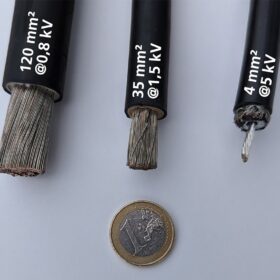
Fraunhofer ISE developing world’s first medium-voltage solar plants
Germany’s Fraunhofer Institute for Solar Energy Systems (Fraunhofer ISE) is developing the world’s first medium-voltage PV plants in Germany to cut material use, reduce costs, and simplify grid integration. They will test 1,500 V and 3 kV string configurations to create cost-effective, voltage-resistant components for large-scale solar.

France installs 5.9 GW of PV in 2025
The country’s cumulative installed PV capacity reached 31.1 GW at the end of December.

China PV module prices expected to hit $0.12/W in H2
China’s PV module prices are expected to hover around $0.12/W in the second half of 2026 as the removal of export VAT rebates, front-loaded demand, and persistent oversupply keep market sentiment volatile.
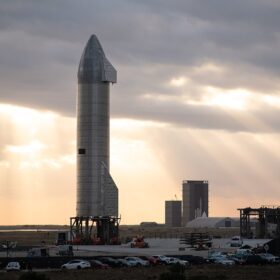
Musk at WEF: Solar space-based AI data centers possible in two to three years
Space-based solar could power AI more efficiently than on Earth, with full-scale deployment possible in two to three years, Elon Musk said last week in Davos, Switzerland. SpaceX’s Starship launch vehicle and its reusable rockets aim to sharply reduce space access costs, enabling solar-powered AI satellites and potentially large-scale extraterrestrial energy infrastructure.
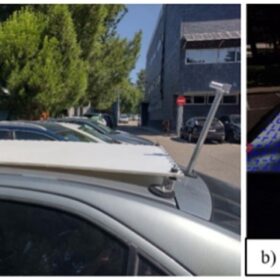
Test tracking algorithms for vehicle-integrated photovoltaics
Researchers in Spain developed a new model incorporating dynamic shading conditions in Madrid to evaluate the yield and test control algorithms for vehicle-integrated PV (VIPV) systems.
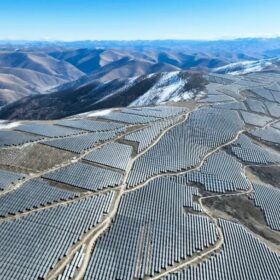
China switches on 1 GW of solar at 4,600 m above sea level
China’s SDIC subsidiary commissioned a 1 GW photovoltaic plant on the Yalong River in Sichuan, making it the world’s third-highest-altitude PV facility at 4,600 m. The project integrates with hydro assets to optimize energy output in the challenging plateau environment.

U.S. government cuts $83 billion in loans, reversing energy transition funding
The U.S. Department of Energy moved to de-obligate or revise billions in financing for clean energy projects while prioritizing natural gas and nuclear power.
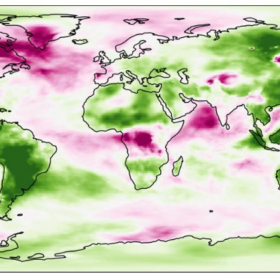
Aerosol divide in 2025 brings clearer skies to China and smoke to Europe
In a new weekly update for pv magazine, Solcast, a DNV company, reveales that last year extreme Canadian wildfires drove aerosol levels around 30% above normal, sharply reducing solar irradiance across Canada and even impacting Europe, while the Congo Basin also saw worsening aerosol conditions. In contrast, China and South America experienced unusually low aerosol levels, supporting stronger solar irradiance due to cleaner air, reduced fires, and favorable climate and policy conditions.
