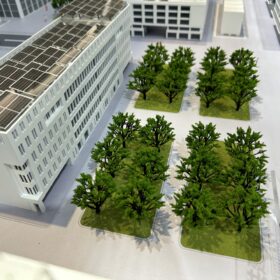
Ten reasons why small-scale, non-utility solar is important
Behind-the-meter solar for homes, businesses, and communities comes with numerous benefits, said a paper from Stanford engineering professor Mark Jacobson.
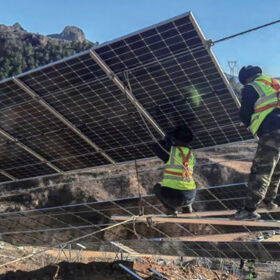
DAS Solar introduces flexible mounting system
DAS Solar has unveiled a new, flexible PV mounting system. The company claims the system, now installed over a fishery in China, has already withstood a particularly strong typhoon, demonstrating its reliability.
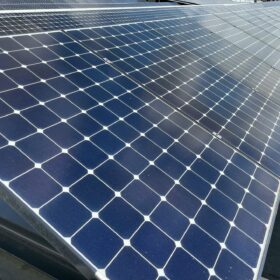
Malaysian developer to construct 100 MW of solar
Malaysian solar specialist Founder Group Ltd. has secured a conditional letter of award to build 100 MW of solar in Malaysia. It says the energy will help to power an AI data center.

UN invests $700,000 in 120 kW hybrid solar plant in DR Congo
The United Nations Development Program (UNDP) has invested nearly $700,000 to build a 120 kW hybrid solar plant in Mambasa, Democratic Republic of the Congo. The community PV project will supply power to more than 300 users, including six health centers, 224 small businesses, and 89 households.

Germany could deploy 10 million heat pumps by 2030
Scientists have used open-source models to simulate heat pump rollout scenarios for the year 2030. Additional investments of around 54 GW to 57 GW of solar PV capacity in a least-cost solution would allow the installation of 10 million heat pumps by the end of the decade.
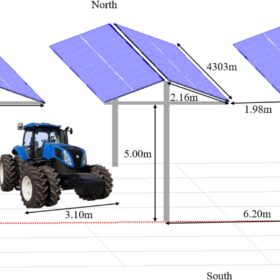
How to combine off-grid agrivoltaics with large-scale hydrogen production
Scientists in the United Kingdom have simulated how a 1 GW off-grid agrivoltaic facility may be used to fuel hydrogen fuel electric cell vehicles across Australia, California, China, Nigeria, and Spain. Their techno-economic analysis showed that the proposed combination could provide a levelized cost of hydrogen ranging from $3.90/kg to $8.13/kg.
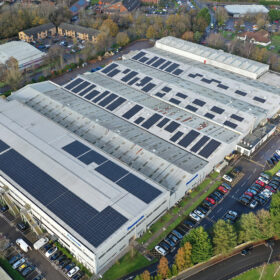
Panasonic powers UK factory with solar-driven hydrogen fuel cell generators
Panasonic has launched a solar-powered hydrogen fuel cell project at its factory in Cardiff, Wales, with the microwave assembly now operating on renewable energy.

Huge Energy unveils new mounting system with patented clamp design
China-based Huge Energy has launched a new mounting system featuring a patented clamp design. The system, made from Zn-Al-Mg coated steel, supports concrete and pile foundations.

ADB commissions 500 kW solar project with 2 MWh of storage in Tuvalu
The Asian Development Bank (ADB) has commissioned a 500 kW solar rooftop project in Tuvalu’s capital, Funafuti, along with a 2 MWh battery energy storage system (BESS).
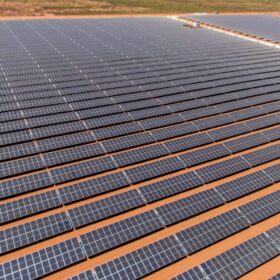
Australian utility switches on solar farm built for cyclonic conditions
APA Group has officially opened a solar project, designed to withstand sustained wind speeds of almost 300 kph, along with a co-located battery energy storage system in Western Australia’s Pilbara region.
