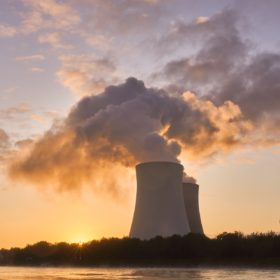
‘Nuclear power is now the most expensive form of generation, except for gas peaking plants’
The latest edition of the World Nuclear Industry Status Report indicates the stagnation of the sector continues. Just 2.4 GW of net new nuclear generation capacity came online last year, compared to 98 GW of solar. The world’s operational nuclear power capacity had declined by 2.1%, to 362 GW, at the end of June.
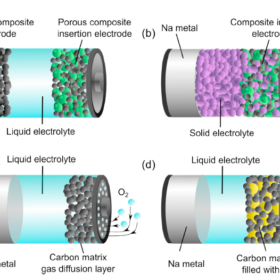
An optimistic – but realistic – perspective for sodium batteries
International researchers have analyzed the potential of sodium-based energy storage and found recent technical advances have arrived faster than those for the lithium-ion batteries which have been studied for three decades. Issues remain, however, before sodium constitutes a complementary option to lithium.

Portuguese green hydrogen for the Port of Rotterdam
The Portuguese and Dutch governments want to connect the hydrogen project of Sines to the Port of Rotterdam and to develop a strategic export-import value chain to ensure the production and transport of green hydrogen to the Netherlands and its hinterland.

Myanmar’s 1 GW solar tender concludes with lowest bid of $0.0348/kWh
The country’s Ministry of Electricity and Energy allocated all tendered solar capacity in its first procurement exercise for large-scale PV. Final prices ranged from $0.0348 to $0.051 per kWh. China Machinery Engineering and Sungrow were the main winners, securing eight and nine projects, respectively.

Subsidy-free, utility scale German solar farms could sell power on spot market
The unsubsidized market is taking another step forward in Germany with the news of two projects ready to sell power to the wholesale market as well as through PPAs.

Air-bridge thermophotovoltaic cell with 30% efficiency, 99% reflectance
U.S. scientists have developed a thermophovoltaic cell that could be paired with inexpensive thermal storage to provide power on demand. The indium gallium arsenide (InGaAs) TPV cell absorbs most of the in-band radiation to generate electricity, while serving as a nearly perfect mirror.

Auctions show Indian renewables still primed for growth
A report by the Institute for Energy Economics and Financial Analysis says there is plenty of investment capital available for Indian renewables, despite pandemic disruption.
General Electric, Shell looking for exits as energy transition accelerates
The two energy giants have announced plans to pivot away from fossil fuel assets as they expand their renewable footprints.

Iberdrola sets up green hydrogen unit
The Spanish energy company, which has hydrogen projects under way in its homeland and the United Kingdom, says it will allocate new resources to position itself at the forefront of the supply of renewables-powered hydrogen.
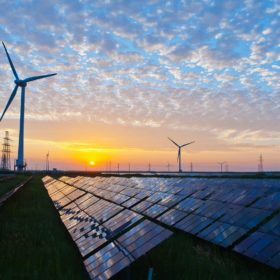
Choosing the right sites for Indian renewables
With biodiversity concerns and social impacts such as arguments over the loss of agricultural land delaying projects, non-profit The Nature Conservancy India has published a report to help developers choose their locations more carefully and get India’s energy transition back on track.
