
Iberdrola begins construction on 317 MW hybrid wind-solar plant in Australia
The AUD 500 million facility is Iberdrola’s first renewable energy project in the country, which has become one of the great growth region’s for the Spanish company.
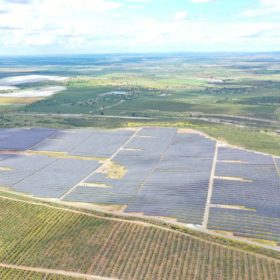
Portugal sees 74 MW of utility-scale PV coming online
German group WiNRG completed three of the six projects totaling 205 MW that it is currently building in Portugal.
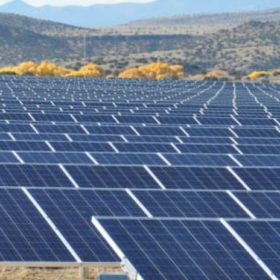
Solar+storage replaces US coal plant
The utility plans to replace the San Juan coal-fired station’s 847 MW of capacity with 650 MW of solar generation and 300 MW/1,200 MWh of accompanying energy storage.
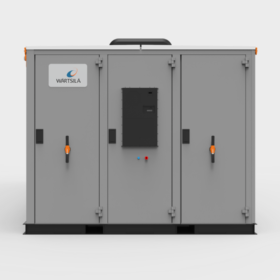
Wärtsilä’s 9 MW battery storage system reduces demand peaks
An independent power producer, AEP OnSite Partners, will be the first to deploy Wärtsilä’s new storage product.
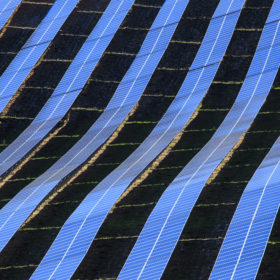
German solar PPA market to reach 300 MW in 2020
After the slump caused by the Covid-19 crisis, the demand for subsidy-free photovoltaic projects has again picked up in Germany. By the end of 2022, German consultancy company Enervies sees a maximum potential of up to 3.6 GW for photovoltaic systems that could be implemented outside of the EEG subsidy scheme.

Nobel Prize-winning auction geniuses want to apply their findings to renewables
Stanford professors Paul R. Milgrom and Robert B. Wilson were awarded the 2020 Nobel Prize in economics for developing a new auction theory and new auction formats for goods and services. Their findings were already successfully used in the electricity energy sector and may now meet the challenge on how to better shape clean energy procurements.

SNEC 2020 CEO Series – Interview with Vice President of International Sales – GoodWe
GoodWe is a rapidly expanding inverter manufacturer that recently went public on the Shanghai Stock Market. The company is a major player on the international stage and has increased its market share in every major PV market. What new products and solutions did GoodWe showcase at SNEC 2020 in Shanghai? What is GoodWe’s international marketing strategy? Ron Shen, Vice President of International Sales, addressed these questions during an exclusive interview with PV Magazine.
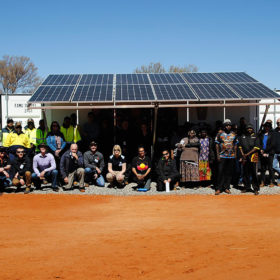
Off-grid solar solution offer water security for remote communities
Solar and energy storage play a key role in Project Gilghi, an off-grid water security system that could help people who have poor access to potable water and sanitation.
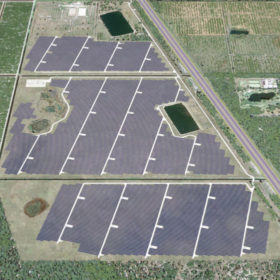
US highways have significant solar potential
A new report by the University of Texas at Austin’s Webber Energy Group looks at how much solar each US state could develop along interstate highways.
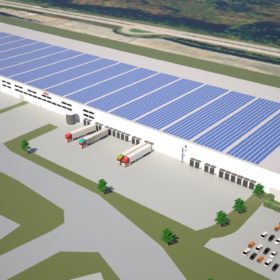
Work begins on Sweden’s largest rooftop PV project
A 5 MW array is being deployed at a logistics center owned by Stockholm-based real estate specialist NREP.
