
Heat pumps are transforming domestic hot water production – How to avoid hygiene risks?
Heat pumps are increasingly used for domestic hot water in Europe due to their efficiency and compatibility with solar power, but their lower operating temperatures can create conditions where Legionella pneumophila may grow if systems are poorly designed. Proper hydraulic design, temperature control, and periodic thermal disinfection ensure both high efficiency and safe, hygienic operation.

Toshiba rolls out AI-powered solar plant portfolio management platform
Toshiba has unveiled a PV management platform within its Spinex for Energy portfolio that enables real-time monitoring and O&M of multiple solar plants.
The system uses AI to track plant performance, detect faults, calculate capacity and PR metrics, automate reporting, and support troubleshooting.
New simulation platform lets energy operators train against realistic cyberattacks
Researchers at Germany’s Fraunhofer FKIE institute developed PowerRange, a virtual simulation platform that helps power grid operators safely test cybersecurity measures and respond to realistic cyberattacks. The platform supports both traditional and renewable grids, offering immersive training across IT, OT, and control systems while highlighting the importance of coordination, communication, and practical defense strategies.
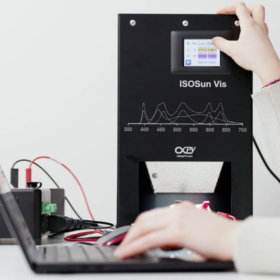
InfinityPV releases new compact solar simulator
The Danish company says its new product is ideal for small to medium-sized solar cell testing. It can simulate light conditions in the 390–700 nm range.
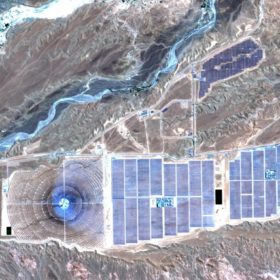
Morocco begins construction on 305 MW Noor Atlas solar program
Morocco’s state energy agency and national utility have signed power purchase agreements (PPAs) and begun construction on six Noor Atlas solar plants totaling 305 MW. The project – financed by KfW, the European Investment Bank and Bank of Africa – aims to expand renewables, support local industry and create regional jobs.

Africa’s next growth frontier: Why agrivoltaics are worth the long-term bet
Africa has abundant sunlight, arable land, and innovative farmers, and agrivoltaics offers a long-term strategy to boost food security, climate resilience, and energy access simultaneously. Success depends on coordinated policy, inclusive community engagement, and patient, innovative finance to build a viable, scalable market.
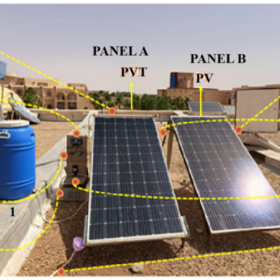
Water-spray cooling can improve PV module efficiency by 28% in arid environments
An Algerian research team has developed a smart water-spray cooling system for PV panels that activates only when temperatures exceed a set threshold, boosting efficiency while minimizing water use in desert conditions. The system raised power output and reduced module temperatures, offering similar efficiency to continuous cooling but with far lower water consumption, pump operation, and costs.
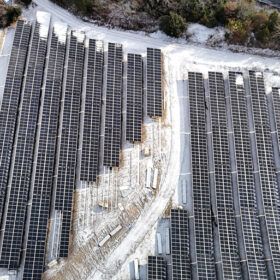
Japan’s 27th solar auction concludes with average final price of $0.029/kWh
Japan has allocated 79 MW of PV capacity in its latest procurement exercise. The lowest price in the auction was JPY 0/kWh.

Thermocold debuts air-to-water heat pump for commercial buildings
The new product line covers 124–644 kW in heating and 128–632 kW in cooling, operates down to -15 C, and supports various configurations with R454B or R410a refrigerants.

Photovoltaics reach 16.1% share of Germany’s electricity generation in 2025
Germany’s Federal Statistical Office (Destatis) says solar generation rose to 70.1 TWh in 2025, up 17.4% from the previous year, even as wind and hydropower output declined and natural gas generation increased 10.2%.
