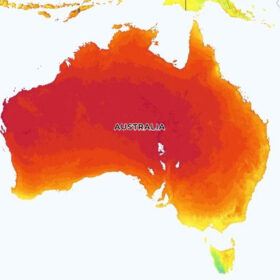
Australia paving way for global solar energy adoption
All of the leading countries for per capita solar and wind generation are in Europe except for Australia, which is generating more solar electricity per capita than any other country. Per capita, it is also a leading producer of wind energy.
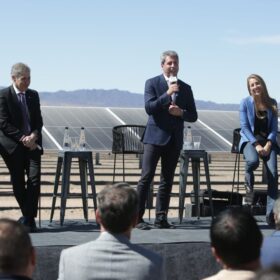
Oil company commissions 100 MW solar plant in Argentina
YPF Luz has switched on a 100 MW solar facility in the province of San Juan, Argentina. It says the array is the first phase of a bigger 300 MW solar project.
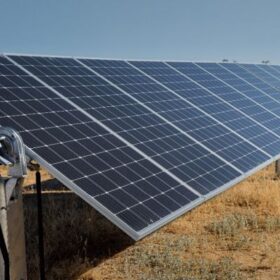
ACEN issues works packages for 400 MW solar project in Australia
Construction of the 400 MW Stubbo Solar Farm in New South Wales, Australia, is scheduled to start in May. Developer ACEN Australia is launching the tender process for a suite of works packages associated with the AUD 800 million ($536 million) PV project.
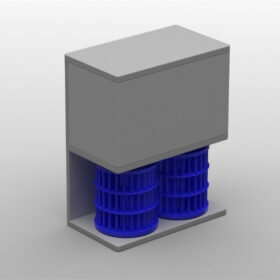
Micro-hydroelectric power generator for sewage treatment plants
Japan’s Ricoh has designed a micro hydropower system for sewage plants that could potentially be used in combination with ground-mounted solar or floating PV. The system features a sustainable water turbine that the company designed with micro-hydroelectricity specialist Seabell Incorporated and the Kanazawa Institute of Technology.
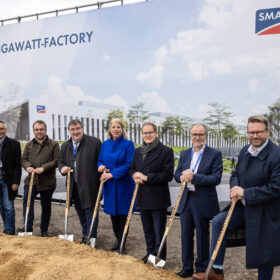
SMA Solar begins work on 20 GW inverter factory in Germany
SMA says its total inverter capacity will double to 40 GW once its new factory is fully operational in Niestetal, Germany.

Israel introduces storage-linked tariff for distributed PV
The Electricity Authority of Israel has decided to regulate the connection of energy storage systems to low-voltage PV plants with capacities of up to 630 kW. It is introducing a supplementary tariff for PV and storage facilities that share single metered connection points to the grid, in order to reduce bottlenecks on the grid.
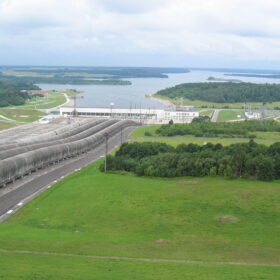
Ignitis Group expands pumped hydro facility in Lithuania
Ignitis Group says it will increase the capacity of the 900 MW Kruonis Pumped Storage Plant by another 110 MW. It notes that the expansion project will be finalized by the end of 2026.
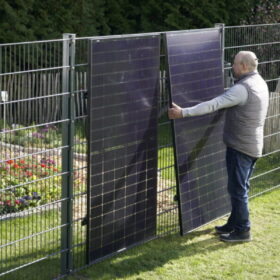
Plug-and-play PV system for garden fences
German PV product supplier Green Akku says that its new PV system can be vertically attached to fences. It reportedly generates more solar power, even in winter.
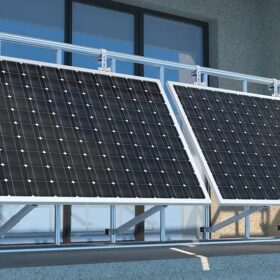
Mibet unveils new balcony solar mounting structure
China’s Mibet has developed a mounting system for PV modules installed on balcony railings, terraces, gardens, and garage rooftops. It offers a maximum title angle of 30 degrees and can withstand wind loads of 30 meters per second.
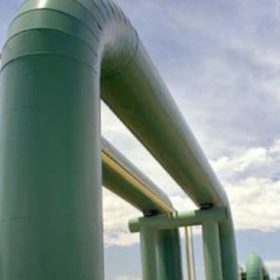
The Hydrogen Stream: Chinese companies push for hydrogen transport
CNPC and Sinopec are working on transporting hydrogen via pipelines, while Matrix Renewables has expanded its green hydrogen partnership with Rolwind Renovables.
