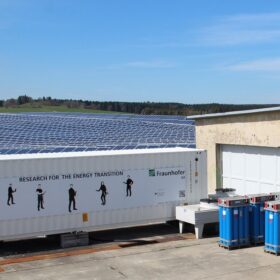
Investigating load scenarios for grid-forming inverters
A consortium led by the Fraunhofer Institute for Solar Energy Systems (ISE) will test grid-forming inverters at a large-scale PV facility in southern Germany. The aim of the first tests is to examine the performance of the devices under real operating conditions, stress factors, and typical stress profiles.
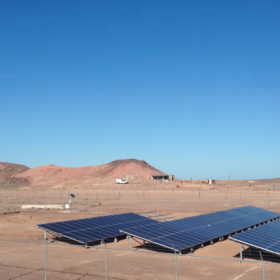
Minigrids edging closer to profitability
The minigrid space continues to attract a lot of attention from development partners in Africa. Minigrids can actually generate profits, so there is no doubt that commercial finance players will eventually jump on the bandwagon, according to the Africa Solar Industry Association (AFSIA).

IRENA SolarCity Simulator to drive economic opportunities, improve healthcare
The International Renewable Energy Agency (IRENA) explains how to optimally use its SolarCity Simulator, an open-access platform designed to help member countries to deploy PV systems at the municipal level.
Fortune favors the brave
The renewables industry fears that the new energy bill that the French government is preparing could make clean power generation even tougher. However, solar analyst Xavier Daval says that betting everything on the nation’s nuclear power fleet is a risky strategy.

South Korea cuts capacity allocations from 4 GW to 2 GW in solar tenders
South Korea has cut its 2030 renewable energy target from 30.2% to just 21.6%, as it seeks to reduce support for solar and other clean energy sources, while preparing the ground for more nuclear power and liquefied natural gas. A lobby group is now challenging the plan in the Seoul Administrative Court.
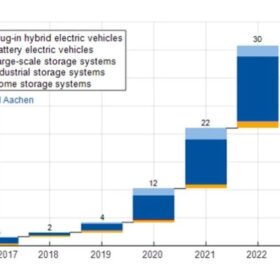
Germany deployed 1.2 GW/1.9 GWh of residential batteries in 2022
Germany’s cumulative residential battery installations hit 5.5 GW at the end of 2022, with the large-scale storage business growing by more than 900%.

Australia hits new rooftop solar record
Residential rooftop solar supplied a record 14% of Australia’s electricity this summer – contributing more than brown coal and more than large-scale wind farms and solar projects.
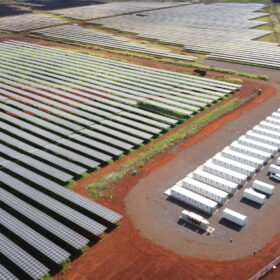
More than 500 MWh of standalone storage capacity starts in Texas
Wärtsilä Energy and Eolian LP have partnered on a new 200 MW grid-scale battery system. They claim that it is the largest merchant energy storage facility in the world.
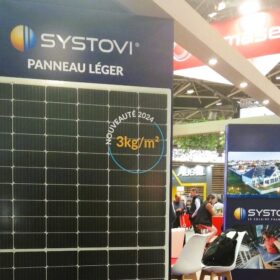
Systovi unveils ultra-lightweight solar panels
French module maker Systovi says its new solar panels weigh just 3 kg/m2. They are designed for flat tertiary rooftops that cannot support the weight of framed solar panels. It will begin selling the new modules in 2024.
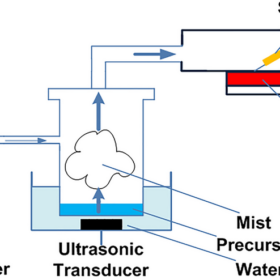
Indian researchers unveil new way to make metal-oxide layers for solar cells
Researchers at IIT Mandi have developed high-quality, uniform thin films of nickel oxide on the silicon substrate using an aerosol-assisted chemical vapor deposition technique, with nickel nitrate as the precursor material.
