
Low-cost direct solar-to-hydrogen ambitions see the light
The road to cheap hydrogen production is riddled with potholes and energy losses. Researchers in Australia have demonstrated rethinking solar technology and skipping electrolysers could hold great promise for reaching the hydrogen holy grail.

Poland to reach 7.8 GW of cumulative PV by 2025
A new report by Instytut Energetyki Odnawialnej shows how Poland will deploy more large-scale PV. Growth is expected to be high in the 2021-22 period, with new capacity additions set to hit 2.8 GW.

Italy installed 115 MW of PV in Q1
The country installed 10 MW more solar in the first three months of the year than it did in the same period a year earlier. Its cumulative capacity surpassed 21 GW by the end of March.

Tesla now claims ‘lowest price for home solar’ – but process is ‘full of pitfalls’
Tesla has decimated its solar business from installation peaks of years past and its market share lead has long been surrendered to Sunrun and others. In December, it claimed it would install 1,000 building-integrated solar roofs per week – a figure it has not come close to achieving in six months. Is this any way to run a solar business?
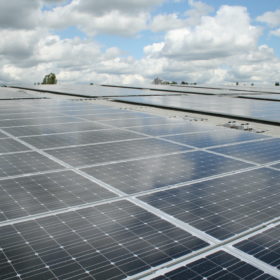
Chinese PV Industry Brief: 3 GW of panel procurement, new PV glass capacity
Seven PV module manufacturers – including JinkoSolar, Longi and JA Solar – won supply contracts this week in a 3 GW procurement round held by China National Nuclear Corp. Flat Glass revealed plans to raise $282.6 million to expand production, while the National Energy Administration reported growth in the residential PV segment.
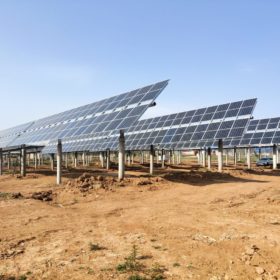
Trina Solar launches TrinaPro Mega ultra-high-power PV solution
As the solar industry starts to embrace ultra-high-efficiency modules, the Chinese PV heavyweight has unveiled TrinaPro Mega, the first integrated solar system in the world that incorporates 500 W+ modules.

Hungary to launch renewables auction in July
The maximum size of eligible projects has been increased from 20 MW to 50 MW. The Hungarian government aims to contract around 390 GWh of generating capacity per year, with 40h GW to be reserved for the Small PVPP category, including installations between 300 kW and 1 MW in size. It will set aside 350 GWh for the Large PVPP group, which includes projects ranging in size from 1 MW to 50 MW.

French railway operator buys 40 MW of power through solar PPA
The 15 to 20-year power purchase agreement is expected to provide around 2% of the electricity consumption of all SNCF passenger trains.
‘Ultra-mega’ 2 GW renewables project approved in India
The state cabinet has approved a 74:26 joint venture proposal by publicly-owned hydropower company THDC India and the Uttar Pradesh New and Renewable Energy Development Agency for the ambitious project.

Volkswagen invests up to US$200 million in solid-state battery builder QuantumScape
This investment comes on top of US$100 million invested in 2018. Venture capital and corporate funding of new energy technologies continues despite – or perhaps because of – the pandemic.
