
Spanish oil giant begins work on its first solar plant
Repsol announced the start of construction on its 126 MW Kappa solar park. The project consists of three plants located in the municipality of Manzanares, Ciudad Real. It will require a total investment of €100 million.
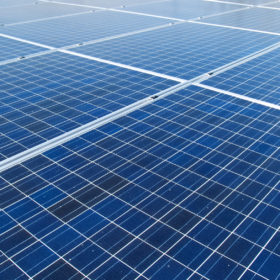
US investor buys 317 MW of solar in India
Marking its second infrastructure investment in India, U.S.-based KKR will acquire 169 MWp of Mumbai-based Shapoorji Pallonji Infrastructure’s solar assets in Maharashtra and 148 MWp in Tamil Nadu for a sum of Rs 15.54 billion (approximately US$204 million).

Ireland’s first renewables auction
Clean energy developers have three days left to pre-qualify for the first procurement exercise staged by the Irish Renewable Electricity Support Scheme. Solar will compete with wind – on and offshore – and biomass projects.
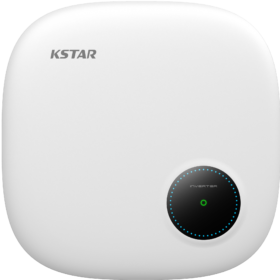
Kstar launches new inverter series for rooftop arrays
The transformer-free products have a power range of 3-6 kW and efficiency of 97.8%. The Chinese manufacturer says the devices are designed to accurately match the voltage and phase of the grid sine wave AC waveform.

Uncapping Germany’s 1 TW of PV potential
EuPD Research has conducted a survey showing that potential investors see Germany’s 52 GW cap for solar incentives in the residential segment as the main barrier to future growth. Renewable energy trade body Bundesverband Neue Energiewirtschaft, meanwhile, said the nation has the potential to reach 1,000 GW of installed solar capacity by 2050.
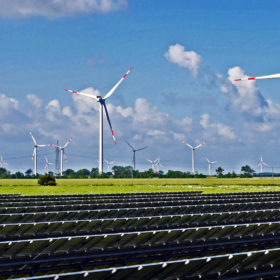
Impact of Covid-19 on the global energy sector
Over the past few months, the Covid-19 pandemic has caused an unprecedented global economic and social crisis. The pandemic has significantly affected all aspects of life, including the energy sector.
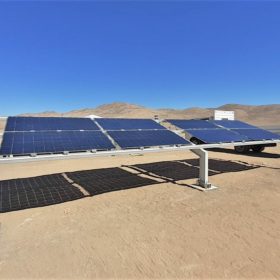
Bifacial panel made in Chile
Atamostec, a private-public initiative supported by Chile’s government-run Production Development Corp. and several industrial partners, has developed a new module. The team claims that the bifacial panel offers an additional annual average gain of 11% compared to monofacial PERC modules with the same cell technology.
Sodium-ion battery manufacturing in India
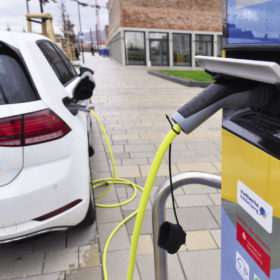
UK-based sodium-ion battery technology developer Faradion has bagged its first order from ICM Australia and is looking at India as the next destination for manufacturing, with its initial target set at 1 GWh.
North German pilot hydrogen project gets cash boost
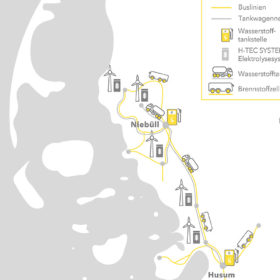
German company GP Joule wants to build hydrogen transport infrastructure in North Friesland. The electricity generated by five wind farms in the region will be converted to green hydrogen to be delivered to filling stations in Husum and Niebüll and used by two fuel-cell buses and five cars.

France makes 44 GW solar target official
Today’s edition of the Official Journal of the French Republic featured two long-awaited decrees: One concerning the multi-year energy program and another on national carbon budgets and the state’s low-carbon strategy.
