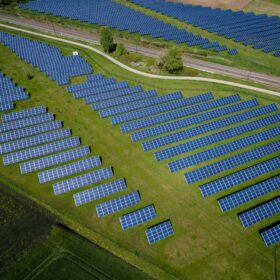
Italy issues special procedures for PV tenders over 1 MW with ‘non-Chinese’ components
The country aims to promote modules manufactured in the EU with new tender criteria. To this end, the government has introduced non-price-related tender criteria, making it one of the first EU countries to implement the NZIA guidelines.

Brazil’s Powersafe unveils all-in-one C&I battery storage product
Featuring Brazilian engineering, Powersafe is investing in its versatile solution and being official distributor of Ecoflow’s portable power stations in Brazil.
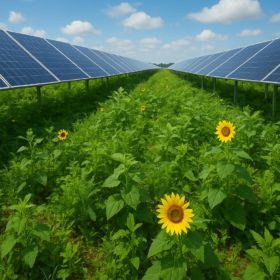
Using drones, satellite and ground data to map vegetation in PV plants
Scientists have developed a multi-scale method to assess vegetation conditions inside PV power plants. The research focused on nine PV plants in China across diverse climate zones. Compared to satellite estimates alone, the method reduces bias by 16.98%.
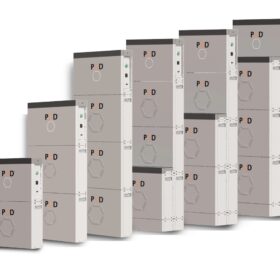
Australia’s sodium-ion energy storage technology launches in Europe
After witnessing strong demand for its sodium-ion technology at home, Australian company PowerCap is bringing its stationary storage products to the European market. The initial launch will cover Italy, Germany, and Spain, with further expansion on the cards. The starting price is expected to be around €500 per kilowatt-hour of storage capacity.

Severe storm destroys 3.1 MW ground-mounted PV system in northern Italy
A severe storm destroyed a 3.18 MW ground-mounted PV plant in Verretto, Italy, leaving local residents without power for several hours before utility crews restored service with backup generation.

‘Diversity and inclusion are not nice-to-haves, but essential ingredients for progress’
This week, Women in Solar+ Europe gives voice to Laura Riedl, Digital Marketing Manager at Solis. She says that the energy transition is inherently complex and multidimensional, which makes the diversity of perspective invaluable. “It helps uncover needs that might otherwise remain invisible and ensures that solutions are robust enough to serve broad communities,” she states.
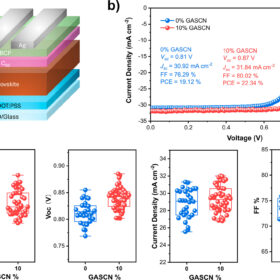
Researchers use guanidinium thiocyanate to raise perovskite cell efficiency
Researchers have used guanidinium thiocyanate as a chaotropic agent to modulate the crystal growth rate during perovskite crystallization. They compared different concentrations of the guanidinium thiocyanate. Champion device efficiency was 22.34%.
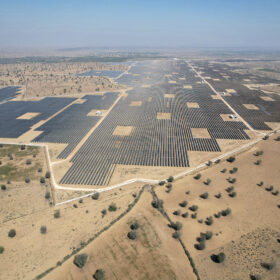
India installs 18 GW solar in H1 of 2025, says Mercom
India added 18 GW of new solar power capacity in the first half of 2025, with over 11 GW installed in the second quarter alone.
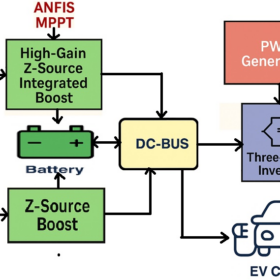
Novel MPPT technique for EV charging combined with PV, fuel cells
Scientists in India have designed a system that uses PV panels, a proton-exchange membrane fuel cell, battery storage, and a supercapacitor. It also relies on an adaptive neuro-fuzzy inference system-based MPPT that reportedly achieves an efficiency of 98.7%.
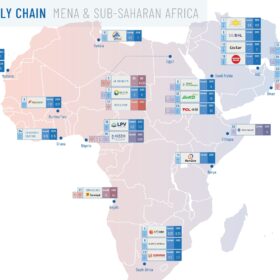
Sinovoltaics maps emerging PV manufacturing hub in Middle East, Africa
In its inaugural study of the emerging manufacturing hub in the Middle East and Africa, the quality assurance and technical compliance company has mapped 3.4 GW of module, 2.5 GW of solar cell, and 8.05 GW of ingot nameplate capacity across 27 sites.
