
Building battery storage systems in India
Nexcharge, a joint venture between Indian lead-acid storage specialist Exide Industries and Swiss lithium-ion battery manufacturer Leclanché, has fully automated assembly lines of li-ion battery packs, modules, and cell testing labs in Gujarat. Ketan Chitnis, VP of Nexcharge’s stationary storage business unit, tells pv magazine that the government’s production-linked incentive scheme is attracting investment.
Poland allocates 870 MW of solar in renewables auctions, lowest bid for PV was $0.05078/kWh
The Polish energy regulator has allocated 570 MW of PV capacity in a procurement exercise for projects exceeding 1 MW in size and around 300 MW in an auction for projects with capacities of up to 1 MW.

Australian graphene discovery could unlock cheaper, more efficient li-ion batteries
Researchers at the University of Wollongong in Australia have discovered a new form of graphene that will improve anode and cathode materials in lithium-ion batteries, making them cheaper and more efficient. They are collaborating with Sicona, which has agreed to buy the researchers’ intellectual property.
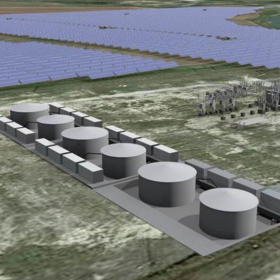
Lockheed Martin to provide flow battery for 103MW solar-storage project in Canada
The Saddlebrook Solar + Storage Project will be a 102.5 MW installation, paired with 6.5 MW/52 MWh of Lockheed Martin’s GridStar Flow battery technology. It will be the largest flow battery energy storage facility in Alberta.
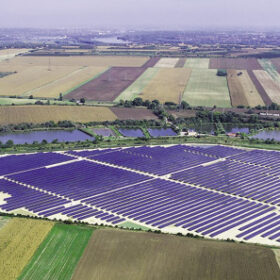
Hungary allocates 183 MW of solar in third renewables auction, average price for utility-scale projects at $0.049/kWh
The auction has been significantly oversubscribed and has seen 57 successful projects among 183 submitted. Around 299 GWh of power was contracted and will be provided exclusively by PV projects.
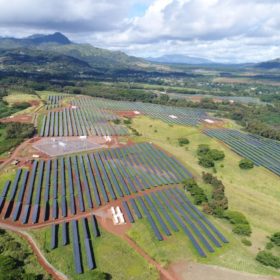
Three strategic M&A transactions announced in the US
Through three different transactions, AES acquired Community Energy Solar, Stem Inc bought AlsoEnergy, and Enphase took over 365 Pronto.
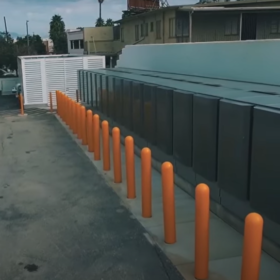
India’s first green hydrogen microgrid
NTPC Limited has selected California-headquartered Bloom Energy’s electrolyzer and hydrogen-powered fuel cell technologies for the nation’s first green hydrogen-based microgrid, which will be powered by a floating solar array.
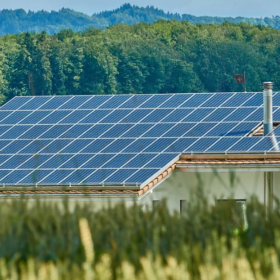
France announces results of commercial and industrial PV tender
The French government has allocated 324 MW in its latest procurement exercise. Average prices were €76.66/MWh for large power plants (500 kWp-8 MWp) and €87.25/MWh for projects below 500 kWp.
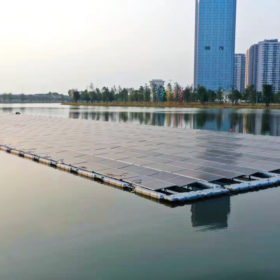
Floating solar array powering recreational park in Vietnam
The 600 kW array was built by Sungrow with 540 W solar panels and its own floating structures.
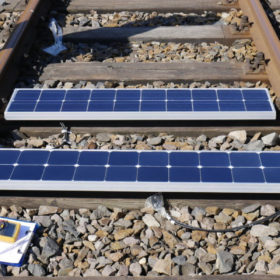
Solar for railways
Germany’s TÜV Rheinland is investigating how photovoltaics could be used for powering railway traction networks in a 14-month research project.
