
NREL develops translucent solar panels for bigger, better crops
Researchers at the National Renewable Energy Laboratory grew tomatoes under translucent solar panels, which could play a promising role in agrivoltaics.
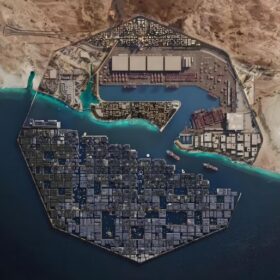
‘Grid-forming technology is no longer experimental – it’s here and working’
In grids increasingly dominated by renewables, grid-forming technology is emerging as critical tool for maintaining stability and ensuring reliable power system operation. In this interview with ESS News, Rui Sun, Sungrow’s Deputy General Manager-Grid Technology Center, explains how grid-forming works, why it matters, and where the technology is already proving its value. He elaborates on technical challenges, regulatory gaps, and why grid-forming could soon become the new industry standard.

Italy launches floating PV tender
The Italian authorities have opened a tender to support the deployment of about 50 MW of floating PV capacity.
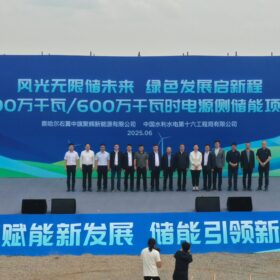
PowerChina breaks ground on world’s largest power generation-side battery storage project
On June 26, the construction of the world’s largest power generation-side energy storage project in Ulan Chab, Inner Mongolia, officially began. This 1 GW/6 GWh project, using lithium iron phosphate (LFP) technology, aims to enhance grid stability and support China’s renewable energy transition.

Researchers identify optimal level of solar, battery storage for European energy market
Researchers in Hungary have developed a model to calculate the optimal PV and battery storage balance to support the European grid in the next few years. They found that the cost-optimal range is at 530–880 GW of PV, combined with battery storage equivalent to 2.5–7.5% of the total intermittent capacity.

World’s largest vanadium flow battery goes online in China
A giant solar-plus-vanadium flow battery project in Xinjiang has completed construction, marking a milestone in China’s pursuit of long-duration, utility-scale energy storage.

‘In engineering, women remain markedly underrepresented’
This week Women in Solar+ Europe gives voice to Maria Ardila, construction engineer at UK-based Cubico Sustainable Investments. She says that progress remains slow in the energy industry because gender matters are often viewed as personal choices rather than the systemic issues they truly are. “Until society challenges the outdated norms and organizational structures that penalize mothers, meaningful advancement toward gender equity in leadership will continue to be constrained,” she states.
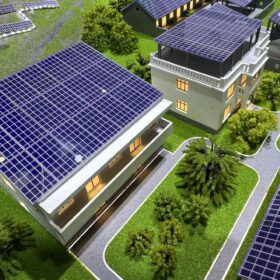
Novel sizing approach for PV, battery storage in smart homes
Scientists in Iran have developed a novel framework to optimize the capacity of PV and battery storage in smart homes, using a two-stage stochastic programming model. They considered the uncertainties in the grid, market price, and PV output, while also looking at different operation cases.
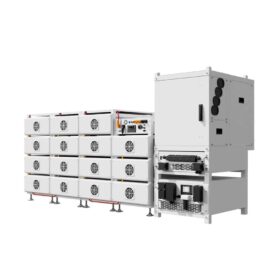
Deye launches C&I power conversion system with battery storage
Deye has developed a new power conversion system (PCS) optimized for solar integration, with modules ranging from 100 kW to 125 kW. The Chinese manufacturer says the PCS supports flexible system design and targets commercial and industrial (C&I) applications.

Germany concludes solar-plus-storage tender with average price of €0.0615/kWh
Germany has concluded a new renewables tender for innovative projects, securing 486 MW of capacity at final prices ranging from €0.0500 ($0.0590)/kWh to €0.0639/kWh
