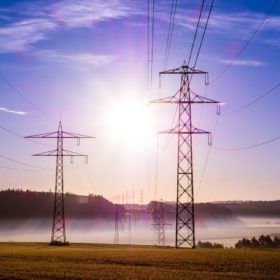
US solar sector shoring up resilience to cyberattacks
As solar and storage technologies are deployed on the U.S. grid in record numbers, there’s no time like the present to take steps to prevent solar and storage from cyberattacks.

Ecuador launches 500 MW renewables tender
The procurement exercise will be open to hydroelectric, wind, solar and biomass projects.
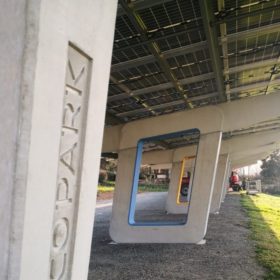
Solar carport without foundations
Conceived by French solar company Mecojit, the solar carport solution can be deployed without excavation work and can be coupled with EV recharging stations.

UK launches new auction for large scale renewables, solar included for first time since 2015
The fourth round of the Contracts for Difference (CfD) scheme is expected to allocate 12 GW of renewable energy capacity. Solar and on-shore wind, which the British government considers well-established technologies, are entitled to secure up to 5 GW, but the limited budget these two technologies have been awarded may not be enough to reach this level.
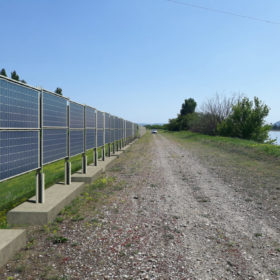
France’s first vertical bifacial solar power plant
French energy company Compagnie Nationale du Rhône is considering deploying vertical PV installations along 400 km of its dikes. A first 104 kW project was deployed at the Sablons dike, in the Isere department.

Utility scale hybrid wind-solar in Madagascar
The project consists of an 8 M W solar PV plant that is scheduled to be operational in 2022 and a 12 MW wind farm that will be commissioned in 2023. Both facilities will be connected to an 8.25 MW battery and will cover 60% of the annual electricity consumption of the Fort-Dauphin mine, located in the south of the island.
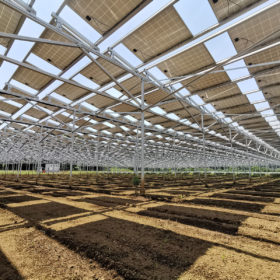
Japan releases new guidelines for agrivoltaics as installations hit 200 MW
The Japanese authorities have released new guidelines for the development of agrivoltaics projects and have excluded installations that do not host crops or livestock in the planning phase. Analyst Takeshi Magami says that agrivoltaics can be developed under the feed-in tariff scheme, in the free market via PPAs, or through a rebate scheme covering 50% of initial investments.
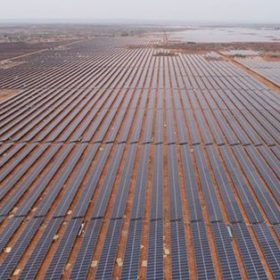
India hits 46.2 GW of installed PV capacity
India recorded 46.2 GW of installed solar capacity at the end of October, led by installations in the states of Rajasthan, Karnataka, and Gujarat.

A cleaner grid arrives as renewables replace fossil fuels
In 2022, the United States is projected to massively increase its solar and wind generating capacity, extending a nearly two-decade march toward a cleaner grid.

Floating PV mounting structure for harsh climatic conditions
Developed by Chinese specialist Mibet, the floating PV structure can reportedly endure wind and snow loads of up to 42m/s and 1KN/㎡, respectively, in all water environments. It was recently deployed in Poland, at a location where temperatures may reach as low as 40 degrees Celsius.
