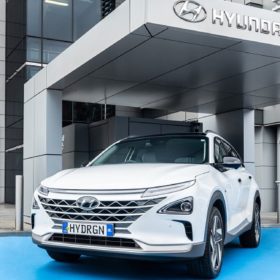
Australian gas supplier signs green hydrogen deal with Hyundai
Utility Jemena has agreed to produce hydrogen gas for Hyundai’s Macquarie Park headquarters in greater Sydney from early 2021.
The PV world 10 years ago – Summer Series Part V
pv magazine editor Pilar Sánchez Molina takes a look at PV sector news from 10 years ago as part of an ongoing series. These insights bring back memories of an exciting, challenging period, while pointing to where we might be in 2030.
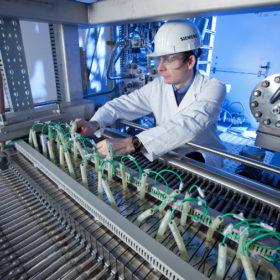
Low-cost, durable catalyst for hydrogen production
Researchers from India’s Centre for Nano and Soft Matter Sciences have developed a coordination polymer-based catalyst for hydrogen production that exhibits exceptionally high durability for 70 hours at a high current density of −300 mA/ cm2.

Facebook announces nearly 1 GW of new energy deals
As Facebook races to meet its goal of becoming 100% powered by renewables by the end of this year, it has made another massive investment in clean energy by signing contracts for 806 MW of new solar and wind capacity, with projects in Ireland and the US states of Utah, Ohio, Illinois, and Tennessee.

Poland’s PV capacity reaches 2.26 GW
The country has deployed around 916 MW of new PV capacity in the first seven months of the year.
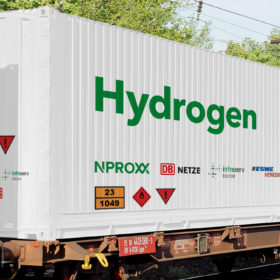
Hydrogen can be transported by rail, German railway company says
A study by DB Energie shows that technically and legally there is nothing to be said against the transport of hydrogen by rail. However, there is still a lack of suitable transport containers.
India’s NTPC 1.2 GW solar auction sees aggressive tariff of INR 2.43/kWh
Low tariff trends can be attributed to developers’ desperate attempt to take advantage of the current situation wherein only a safeguard duty of 14.9% is applicable, according to JMK Research.
The PV world 10 years ago – Summer Series Part IV
pv magazine editor Pilar Sánchez Molina takes a look at PV sector news from 10 years ago as part of an ongoing series. These insights bring back memories of an exciting, challenging period, while pointing to where we might be in 2030.
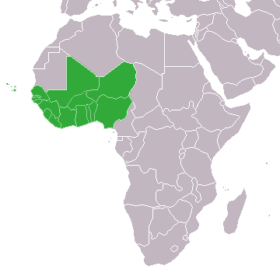
Consultants needed for West Africa Clean Energy Corridor
The ECOWAS Regional Centre for Renewable Energy and Energy Efficiency is seeking consultants for the West African Clean Energy Corridor program. It expects the region to deploy 7.6 GW of renewable energy capacity by 2030.

The PV world 10 years ago – Summer Series Part III
pv magazine editor Pilar Sánchez Molina takes a look at PV sector news from 10 years ago as part of an ongoing series. These insights bring back memories of an exciting, challenging period, while pointing to where we might be in 2030.
