
AI-enabled hacks expose remote shutdown risk in microinverters
IT security firm Jakkaru has identified a vulnerability in microinverters from AP Systems that could enable a “kill switch” scenario, potentially shutting down tens of thousands of inverters simultaneously and disrupting grid operations.

Greece installs 1.9 GW of PV capacity in 2025
Greece installed around 1.9 GW of new solar capacity in 2025, bringing total installed solar capacity to roughly 11.5 GW, according to industry estimates.
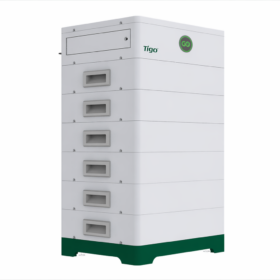
Tigo releases modular battery for residential PV
The US manufacturer has launched a modular residential battery for Europe, scalable from 7.3 kWh to 47.9 kWh with LFP chemistry and IP65 protection. The system offers up to 23.3 kW nominal power, over 6,000 cycles, and a deapth of discharge of 90%.

‘Photovoltaics are, first and foremost, about energy security’
In an interview with pv magazine, Carolina Novac, Secretary of State at Moldova’s Ministry of Energy explains how the country raised its solar capacity to 1 GW while advancing wind, storage, and regulatory reforms to strengthen energy security and reach 30% renewables by 2030. The Moldovan government is now focusing on scaling BESS, modernizing the power market, and enhancing cybersecurity through stronger policies and international cooperation.
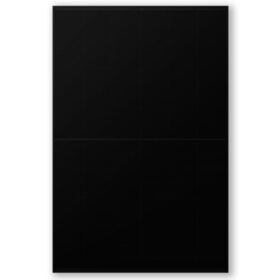
Bauer Solar launches 480 W back-contact solar module
The German manufacturer said its new back-contact solar panel has a power conversion efficiency of up to 23.52%.
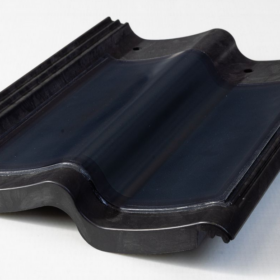
TNO unveils 12.4%-efficient perovksite solar tile
The Dutch research institute has presented what it describes as the world’s first perovskite-based roof tile, achieving up to 13.8% efficiency on standalone modules and 12.4% when installed on a curved surface. The flexible modules were produced using TNO’s experimental roll-to-roll platform,
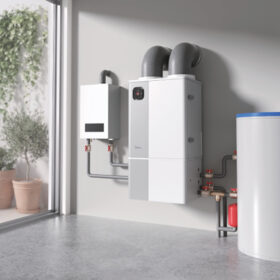
Midea unveils PV-compatible indoor heat pump for space-constrained residential applications
Midea has launched a compact indoor air-source heat pump for retrofit and space-constrained homes. The R290-based system offers up to 4.45 kW output, a coefficient of performance of 4.5 and smart PV-compatible controls.
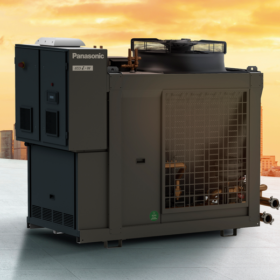
Panasonic debuts propane heat pump for light industrial, multi-residential buildings
Designed for commercial and multi-residential buildings, the Aqua‑G EVO heat pump can replace gas boilers, cascade up to eight units, and integrate with Panasonic’s complete HVAC ecosystem.
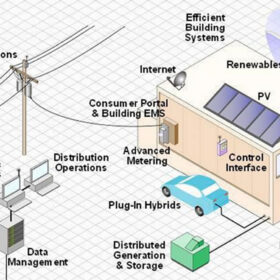
Industry 4.0 technologies raise cyber risks for smart renewables grids
An international research team developed a multi-stage intrusion detection system that uses supervised and unsupervised AI techniques to detect and mitigate cyber threats in smart renewable energy grids. The system can reportedly achieve high accuracy, low false positives, and real-time detection, outperforming traditional intrusion detection system models.

Austria deploys 1.63 GW of solar in 2025
Austria’s photovoltaic market slowed in 2025, with around 1,634 MW of new capacity installed, bringing the country’s total PV capacity to approximately 9.9 GW.
