
Zendure unveils new batteries for balcony, rooftop solar
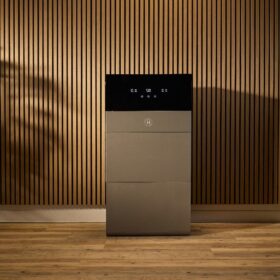
Zendure has a new investor, new factory in China, and with a new product launch for the residential sector, is aiming to reclaim the crown of the top supplier for plug-in and balcony solar systems and storage.
Hoymiles releases all-in-one residential inverter and modular battery
The Chinese company said its modular system supports up to 64 kWh of storage, multiple PV inputs, and 0 ms backup switching for uninterrupted operation.

China expects up to 287 GW of new PV capacity additions in 2026
China’s PV industry expects 238 GW to 287 GW of domestic capacity additions in 2026 as it pivots away from volume-led growth after a loss-making year driven by overcapacity and sharp price declines. The shift follows rapid expansion in 2021-25 that lifted cumulative capacity above 1.2 TW, annual additions beyond 300 GW and exports over $180 billion.

Deye releases new off-grid inverter series
The Chinese manufacturer said its new OG02 series includes IP-65-rated inverters with an AC output power of 3 kW to 6 kW. The new products also feature a maximum efficiency of 97.6% and a European efficiency of 96.5%.

Italy installs 6.4 GW of solar in 2025
The country’s cumulative installed PV capacity reached 43.5 GW at the end of December, according to the latest figures released by Italian grid operator Terna.

Chad’s installed PV capacity hits 110 MW, supplying 37% of electricity
Chad has one of Africa’s highest solar penetration rates, a result of a small power system with just 12% electrification, as large-scale solar and storage projects gather pace around N’Djamena, even as political uncertainty over oil revenues constrains faster deployment.

Senegal’s solar capacity hits 671 MW
Senegal has reached an 84% electrification rate, with 294 MW of residential PV installed, while several large-scale solar-plus-storage projects are under development, despite the start of production at the Sangomar gas field.

Growatt launches 5 kWh AC-coupled balcony storage system
The IP66-rated Aura 5000 system features bidirectional inverter functionality and an AC output of up to 2.5 kW.

Spain deploys 1.13 GW of solar for self-consumption in 2025
Spain installed 1.14 GW of solar capacity for self-consumption in 2025, lifting cumulative capacity to 9.3 GW, as residential and commercial installations declined while industrial and off-grid segments showed greater resilience, according to data from the Spanish Photovoltaic Union.

Early tropical storm cuts solar in Philippines, while East Asia sees La Niña gains
In a new weekly update for pv magazine, Solcast, a DNV company, reports that in January most of East Asia experienced normal to above-average solar irradiance, with southeastern China seeing surges due to reduced clouds and low aerosol levels under lingering La Niña effects. In contrast, the Philippines faced below-average irradiance from early Tropical Storm Nokaen, while other regional cities like Seoul, Tokyo, and Taipei recorded modest gains.
