
Semi-transparent antimony trisulfide PV cell for solar window applications
The 5.5%-efficient cell was fabricated through a low-temperature, two-step manufacturing process that is compatible with existing window glass manufacturing technology. Cells made with 70nm antimony trisulfide films achieved the best fill factor of around 57%, while the highest power conversion efficiencies were achieved with films ranging from 70 to 100nm.
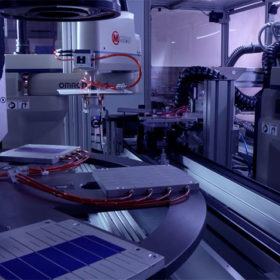
Mondragon Assembly unveils tabber stringer for heterojunction PV cells
Mondragon Assembly has developed a new solution for the interconnection of heterojunction cells with electrically conductive adhesive tech. It can now produce up to 2,600 cells per hour, and is already available on the market.
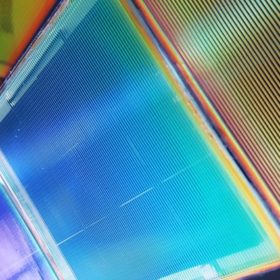
Colored optic filters for BIPV products
Dutch researchers have used optic colored filters to make building-integrated PV products more suitable for urban environments with cultural heritage value. They discovered that the filters do not affect a cell’s open-circuit voltage and fill factor, but only the short-circuit current.

Solar carport without foundations
Conceived by French solar company Mecojit, the solar carport solution can be deployed without excavation work and can be coupled with EV recharging stations.
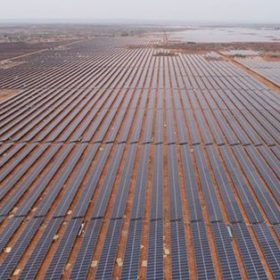
India hits 46.2 GW of installed PV capacity
India recorded 46.2 GW of installed solar capacity at the end of October, led by installations in the states of Rajasthan, Karnataka, and Gujarat.
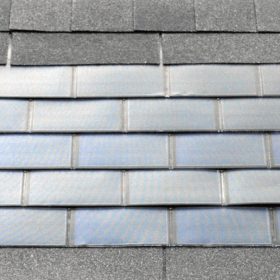
Defining BIPV
Incorporating solar into our built environments represents an opportunity for hundreds of gigawatts to be installed worldwide without taking up any additional land. In many cases though, this will require solutions beyond typical rooftop PV installations and much closer cooperation between the PV and construction industries. A new report published by IEA PVPS looks to bring together the interests of both worlds, and clearly categorize both the building envelope and energy functions of different BIPV components.
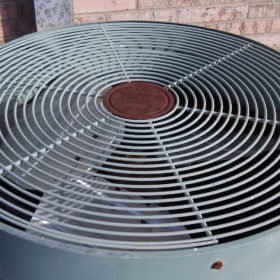
Non-technical factors influencing market acceptance for solar heat pumps
The lack of proper business models, high upfront costs, and long payback periods are the key barriers to enabling the wider adoption of solar-powered heat pumps, according to recent research. Other factors reducing market acceptance are a lack of information on the technology and sociodemographic factors like public perception and peer effects.
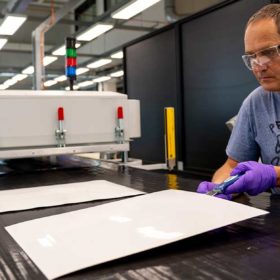
Recyclable, back-contact solar panel from the Netherlands
Conceived by a Dutch consortium, according to Design for Recycling guidelines, the panel is being developed with two different encapsulants, one for the front of the module, which joins the glass and cells together; and a slightly different formulation for the back of the module, which attaches cells and backsheet together.
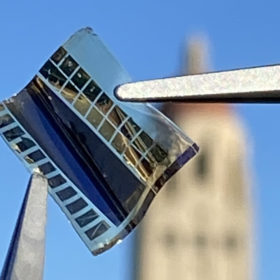
Flexible metal dichalcogenide solar cell with 5.1% efficiency
Stanford scientists have fabricated a transition metal dichalcogenide (TMD) solar cell that is claimed to overcome the typical issue of this kind of PV device, the so-called Fermi-level pinning. They used graphene contacts to mitigate this phenomenon and achieved a record power per weight of 4.4 W/g.

Deploying solar on curved metal roofs
Midsummer and Medacciai are developing a BIPV solution for curved metal roofs in southern European markets, through a five-year deal.
